

Chile Declares Independence: O'Higgins Breaks Spanish Rule
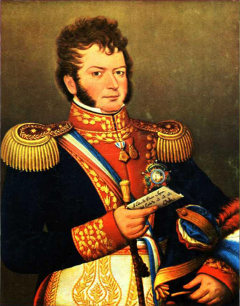
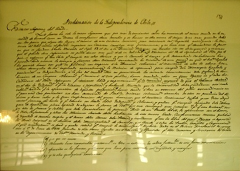
Bernardo O'Higgins, the illegitimate son of a former Viceroy of Peru, signed Chile's Declaration of Independence near Concepcion on February 12, 1818, formally severing ties with Spain after eight years of revolutionary warfare. The declaration followed Jose de San Martin's decisive victory at the Battle of Chacabuco the previous year, which had liberated Santiago from royalist control. O'Higgins became the new republic's Supreme Director and immediately set about building state institutions, abolishing noble titles, and establishing public education. His authoritarian tendencies, however, quickly alienated the Chilean aristocracy. He was forced to resign in 1823 and spent the rest of his life in exile in Peru. The Chilean independence movement was unusual in Latin America because it was driven more by local elites seeking autonomy than by popular revolution, a pattern that shaped the country's relatively stable political evolution compared to its neighbors.
February 12, 1818
208 years ago
Key Figures & Places


What Else Happened on February 12
Pope John VIII crowned Charles the Fat as Holy Roman Emperor, reuniting the fractured Carolingian Empire under a single ruler for the final time. This consolida…
Bruno of Toul walked into Rome expecting a coronation. Instead, he refused it. He wouldn't accept the papacy unless the Roman clergy and people elected him prop…
Robert of Arbrissel was preaching to prostitutes and lepers when Urban II made him found an abbey. The Pope wanted him institutionalized — literally. Robert had…
Galeazzo di Santa Sofia cut open a corpse in front of students in Vienna. Not to solve a crime. Not to determine cause of death. To teach anatomy. This was ille…
English archers and infantry barricaded themselves behind a wall of salted herring barrels to repel a combined French and Scottish assault. By successfully prot…
Sir John Fastolf circled his wagons into a fortified laager and repelled a Franco-Scottish force twice his size at Rouvray, protecting a vital supply convoy of …
Talk to History
Have a conversation with historical figures who witnessed this era. Ask questions, explore perspectives, and bring history to life.