

British Bullets Fire Five: The Boston Massacre Ignites Revolution
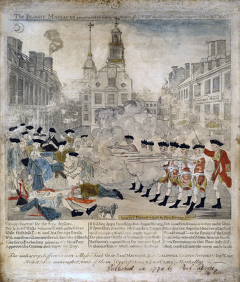
British soldiers fired into a crowd of colonists outside the Custom House on King Street in Boston on March 5, 1770, killing five men. Crispus Attucks, a man of African and Native American descent, was the first to fall and became the first casualty of the American Revolution. The soldiers had been pelted with snowballs, oyster shells, and chunks of ice by a mob that had been harassing the sentry for hours. Captain Thomas Preston ordered his men to hold fire, but in the chaos, shots rang out. John Adams, who would later become the second president, defended the soldiers at trial, arguing that they had acted in self-defense. Six were acquitted; two were convicted of manslaughter and branded on their thumbs. Samuel Adams and Paul Revere exploited the incident for propaganda purposes, producing an inflammatory engraving that depicted the soldiers firing in formation on a helpless crowd. The 'Boston Massacre' became the colonists' most powerful recruitment tool for revolution.
March 5, 1770
256 years ago
Key Figures & Places
Kingdom of Great Britain
Wikipedia
United States
Wikipedia
American Revolutionary War
Wikipedia
Boston Massacre
Wikipedia
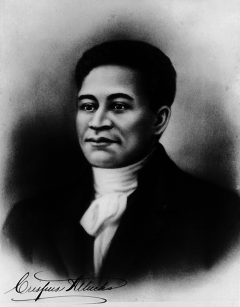
Crispus Attucks
Wikipedia

Boston Massacre
Wikipedia

Crispus Attucks
Wikipedia

American Revolutionary War
Wikipedia

Boston
Wikipedia

British Empire
Wikipedia
Kingdom of Great Britain
Wikipedia

Thirteen Colonies
Wikipedia

Americans
Wikipedia

British
Wikipedia

1723
Wikipedia
What Else Happened on March 5
He brought 90,000 soldiers and a library. Julian the Apostate marched from Antioch into Persia with the largest Roman army assembled in decades — and 1,100 supp…
He was forty years old, hungover, and disgusted with himself when Naser Khosrow decided to abandon his comfortable government job in Persia and walk to Mecca. T…
Grand Duke Traidenis crushed the Livonian Order at the Battle of Aizkraukle, killing the Master of the Order, Ernst von Rassau, and seventy knights. This decisi…
King Henry VII granted John Cabot and his sons royal authority to sail under the English flag in search of new lands. This expedition led to the first European …
The Vatican waited 73 years to ban Copernicus's book. Why? Because nobody thought it was serious. When *On the Revolutions of the Heavenly Spheres* appeared in …
The Catholic Church officially banned Nicolaus Copernicus’s *De revolutionibus orbium coelestium* in 1616, declaring his heliocentric model formally heretical. …
Talk to History
Have a conversation with historical figures who witnessed this era. Ask questions, explore perspectives, and bring history to life.