

Caesar Destroys Republicans at Thapsus: Cato Takes Own Life
Caesar's legions routed the combined Republican forces at Thapsus in North Africa on April 6, 46 BC, in a battle that quickly devolved into a massacre. Caesar's veterans broke formation to slaughter the fleeing enemy against his orders, killing an estimated 10,000 Republicans. Cato the Younger retreated to Utica, where he read Plato's Phaedo twice, then stabbed himself in the abdomen. When a doctor sewed the wound, Cato tore out his own intestines rather than submit to Caesar's famous clemency. His death made him a martyr for the Republican cause and a symbol of Stoic virtue for centuries of philosophers. Caesar returned to Rome to celebrate four triumphs in a single month.
April 6, 46 BC
Key Figures & Places
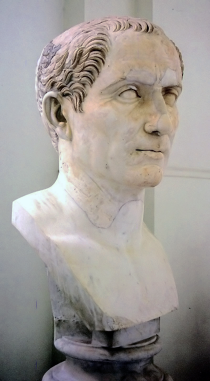
Julius Caesar
Wikipedia
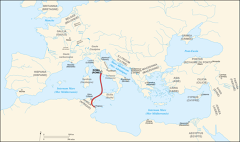
battle of Thapsus
Wikipedia
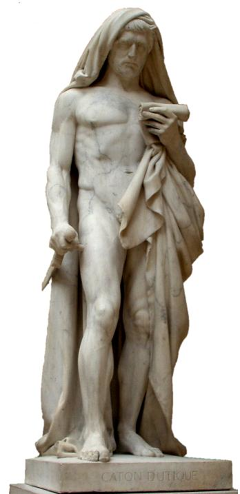
Marcus Porcius Cato (Cato the Younger)
Wikipedia

Julius Caesar
Wikipedia

Quintus Caecilius Metellus Pius Scipio
Wikipedia

Cato the Younger
Wikipedia

Battle of Thapsus
Wikipedia
Años 40 a. C.
Wikipedia
Pompeyanos
Wikipedia
Titus Labienus
Wikipedia
Cesariano (facción)
Wikipedia
What Else Happened on April 6
Stilicho forced a tactical stalemate against Alaric’s Visigoths at the Battle of Pollentia, halting their initial invasion of Italy. By capturing the Visigothic…

An arrow wound to his shoulder turned deadly not from the metal, but from a surgeon's clumsy knife slicing through infected tissue in Châlus-Chabrol. Richard I,…
Ayyubid forces routed the Crusader army and captured King Louis IX of France at the Battle of Fariskur, effectively destroying the Seventh Crusade. The French k…
They burned their own king to keep him safe from the English crown. In 1320, Scottish nobles signed this letter at Arbroath Abbey, explicitly telling Pope John …
Petrarch first glimpsed Laura in the church of Saint Clare in Avignon, sparking a lifelong obsession that fueled his sonnets. This encounter transformed the ver…
He wasn't crowned in Lisbon's grand palace, but in the smoke-choked church of Aljubarrota, right after a battle where 14,000 men fell to stop a Spanish invasion…
Talk to History
Have a conversation with historical figures who witnessed this era. Ask questions, explore perspectives, and bring history to life.