

Supreme Court Breaks Standard Oil: Antitrust Law Born
The U.S. Supreme Court ruled in Standard Oil Co. of New Jersey v. United States on May 15, 1911, that John D. Rockefeller's Standard Oil constituted an unreasonable restraint of trade under the Sherman Antitrust Act. The Court ordered the company dissolved into 34 separate entities. Ironically, the breakup made Rockefeller richer: stock in the successor companies, including what became Exxon, Mobil, Chevron, Amoco, and others, soared in value because investors could now buy focused companies rather than a sprawling conglomerate. Rockefeller's personal fortune doubled within a few years. The ruling established the "rule of reason" standard for antitrust enforcement, requiring courts to evaluate whether a monopoly's behavior was unreasonable rather than condemning all monopolies automatically.
May 15, 1911
115 years ago
Key Figures & Places
Supreme Court of the United States
Wikipedia

Standard Oil
Wikipedia
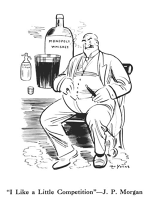
monopoly
Wikipedia
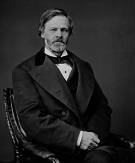
Sherman Antitrust Act
Wikipedia
Standard Oil Co. of New Jersey v. United States
Wikipedia

Supreme Court of the United States
Wikipedia
Standard Oil
Wikipedia
Monopoly
Wikipedia

Sherman Antitrust Act
Wikipedia

Theodore Roosevelt
Wikipedia

John D. Rockefeller
Wikipedia
What Else Happened on May 15
The Roman people handed their biggest insult to the senate by letting a centurion dedicate a temple instead of a consul. Marcus Laetorius, a senior military off…
Liu Bei declared himself emperor of Shu Han, formally claiming the mantle of the fallen Han dynasty to challenge the legitimacy of his rivals. This act fracture…
The twenty-one-year-old emperor was found hanging in his bedroom at Vienne, but nobody believed it was suicide. Valentinian II had just ordered his general Arbo…
The Lombard king married a Catholic princess from Bavaria, and she didn't even have to convert him—she converted his entire kingdom instead. Theodelinda brought…
He swam across the Euphrates to escape the assassins who'd already killed ninety of his relatives. Abd al-Rahman I had watched the Abbasid caliphate butcher his…
The monastery burned to the ground, and Michael the Syrian decided to rebuild it himself. Not delegate it. Not commission it. Do it. As patriarch, he could've d…
Talk to History
Have a conversation with historical figures who witnessed this era. Ask questions, explore perspectives, and bring history to life.