

Von Braun Joins U.S.: Nazi Rocketeer Builds Apollo Legacy
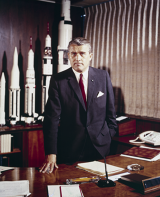
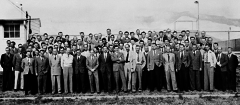
Wernher von Braun surrendered to American forces in May 1945 and was secretly brought to the United States under Operation Paperclip, a program that recruited over 1,600 German scientists, engineers, and technicians. Von Braun had designed the V-2 rocket that killed over 9,000 people in London, Antwerp, and other cities, and was built using slave labor from the Mittelbau-Dora concentration camp, where an estimated 20,000 prisoners died. In America, he became the chief architect of the Saturn V rocket that carried Apollo astronauts to the Moon. His Nazi past was quietly suppressed until investigative journalists uncovered his SS membership and evidence that he visited the Mittelwerk underground factory where prisoners were worked to death. His legacy remains deeply contested: visionary space pioneer or war criminal who escaped justice through American Cold War opportunism.
June 20, 1945
81 years ago
Key Figures & Places

What Else Happened on June 20
Attila the Hun lost a battle he never actually lost. At the Catalaunian Plains in modern-day France, somewhere between 150,000 and 300,000 men clashed in one of…
Prince Mochihito’s failed bid for the throne ignited the First Battle of Uji, pitting the Taira clan against the Minamoto. This clash shattered the fragile peac…
Oxford didn't start with a charter. It started with a fight. English scholars got expelled from Paris around 1167 — a diplomatic spat between Henry II and Louis…
The War of the Sicilian Vespers started with a bell. Easter Monday, 1282 — Sicilians massacred thousands of French soldiers in a single night, then handed the i…
Christian of Brunswick led 15,000 Protestant troops toward the Main River at Höchst — and walked straight into a trap. Tilly's Catholic League forces were waiti…
Algerian pirates raided the coastal village of Baltimore, County Cork, kidnapping over 100 villagers to sell into North African slave markets. This brutal assau…
Talk to History
Have a conversation with historical figures who witnessed this era. Ask questions, explore perspectives, and bring history to life.