

Human Genome Decoded: The Map of Life Revealed
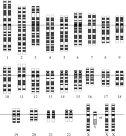
Scientists from the Human Genome Project (publicly funded) and Celera Genomics (privately funded) jointly announced the completion of a working draft of the human genome on June 26, 2000, at the White House with President Bill Clinton and British Prime Minister Tony Blair participating via satellite. The achievement mapped approximately 3.1 billion DNA base pairs across 23 chromosome pairs. The project cost $2.7 billion over 13 years; Craig Venter's Celera completed a rival draft in three years using the whole-genome shotgun sequencing method. The "completion" was actually about 90% of the genome; a truly complete sequence, including centromeric regions and other difficult sections, was not achieved until 2022 by the T2T Consortium. The genome project has since enabled personalized medicine, forensic identification, ancestry tracing, and thousands of advances in biomedical research.
June 26, 2000
26 years ago
Key Figures & Places

What Else Happened on June 26
Augustus didn't want Tiberius. He wanted his grandsons, Gaius and Lucius — young, bloodline-pure, the heirs he'd groomed for years. Both died young. So in 4 AD,…
Elagabalus adopted Alexander Severus because his grandmother forced him to. Julia Maesa had already decided her grandson was a disaster — too erratic, too stran…
Julian took a spear to the liver while retreating from Persia — and nobody knows who threw it. His own soldiers were suspects. The last pagan emperor of Rome ha…
Julian didn't die in battle — he died from a spear thrown by someone in his own retreating column. Nobody claimed credit. The Roman army was already falling apa…
Benedict II refused to wait. After his election in 683, he sat unconfirmed for nearly a year while messengers crossed the Mediterranean, bureaucrats shuffled pa…
The man chosen to lead the Catholic Church in 687 waited nearly a year to actually take the job. Benedict II was elected almost immediately after Leo II died, b…
Talk to History
Have a conversation with historical figures who witnessed this era. Ask questions, explore perspectives, and bring history to life.