

Kuwait Liberated: Coalition Victory Ends Gulf War
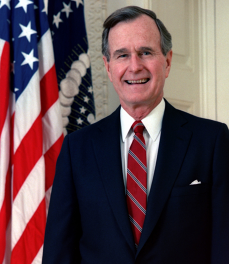
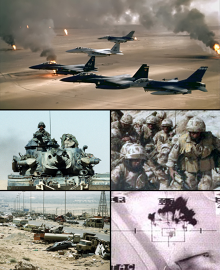
President George H.W. Bush declared Kuwait liberated on February 27, 1991, ending Iraq's seven-month occupation after a coalition ground offensive that lasted exactly 100 hours. The speed of the victory stunned military analysts: Iraqi forces, the world's fourth-largest army, collapsed in days under the combined weight of American armor, precision air strikes, and a flanking maneuver through the Iraqi desert that cut off retreat routes. Over 80,000 Iraqi soldiers surrendered. Kuwait's liberation was followed by Saddam Hussein's brutal suppression of Shia and Kurdish uprisings that the US had encouraged but refused to support with military force. Bush chose not to pursue regime change, citing the coalition's limited UN mandate. The decision haunted his presidency and was reversed by his son twelve years later. The US established permanent military bases in Saudi Arabia, a presence that became Osama bin Laden's primary grievance against the American government.
February 27, 1991
35 years ago
Key Figures & Places
President of the United States
Wikipedia
George H. W. Bush
Wikipedia
Gulf War
Wikipedia

Kuwait
Wikipedia

Gulf War
Wikipedia

George H. W. Bush
Wikipedia

Kuwait
Wikipedia

Iraq
Wikipedia

United Nations Security Council
Wikipedia

Liste des résolutions du Conseil de sécurité des Nations unies
Wikipedia

Opération des Nations unies en Côte d'Ivoire
Wikipedia
Résolution 19 du Conseil de sécurité des Nations unies
Wikipedia

Détroit de Corfou
Wikipedia
Ali Mohamed al-Zinkawi
Wikipedia

Lancer du marteau
Wikipedia

فاطمة الربيعي
Wikipedia
What Else Happened on February 27
Emperor Theodosius I made Christianity the only legal religion of the Roman Empire on February 27, 380. Not just legal — mandatory. The Edict of Thessalonica de…
Theodosius II built the University of Constantinople in 425 because his wife told him to. Aelia Eudocia, a poet and intellectual herself, wanted a state-funded …
Abaoji unified the disparate Khitan tribes and assumed the title of khagan, consolidating power over the vast steppes of Inner Mongolia. This centralization tra…
A nomadic warlord who couldn't read Chinese became emperor of a dynasty that would last two centuries. Abaoji unified the Khitan tribes through a mix of marriag…
England signed the Treaty of Berwick with Scottish Protestant lords in 1560, agreeing to send troops north to kick out the French garrison. The French were ther…
England sent troops into Scotland in 1560 because Scottish nobles asked them to. The Lords of the Congregation wanted French soldiers out. They'd been there sin…
Talk to History
Have a conversation with historical figures who witnessed this era. Ask questions, explore perspectives, and bring history to life.