

Texas Declares Independence: Birth of a Republic
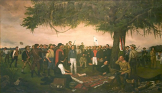
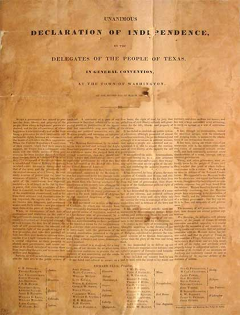
Fifty-nine Texan delegates gathered at Washington-on-the-Brazos on March 2, 1836, to sign a Declaration of Independence that borrowed heavily from Thomas Jefferson's 1776 original. The signers included empresarios, lawyers, doctors, and a former governor of Tennessee named Sam Houston, who was appointed commander of the Texan army the same day. The declaration was signed while the Alamo was under siege 150 miles to the southwest, lending desperate urgency to the proceedings. Texas declared itself a sovereign republic with the right to negotiate international treaties, maintain an army, and establish its own currency. Mexico never recognized the declaration. Within six weeks, Santa Anna's army had massacred the Alamo's defenders and executed 342 Texan prisoners at Goliad. Houston's forces retreated across Texas until April 21, when they caught Santa Anna's army napping along the San Jacinto River and won the battle that secured independence in eighteen minutes.
March 2, 1836
190 years ago
Key Figures & Places




What Else Happened on March 2
Belisarius commanded just 5,000 men inside Rome when 150,000 Ostrogoths arrived at the walls. The Byzantine general knew he couldn't hold the city through conve…
He ruled for exactly one year and seventeen days. Louis V, crowned King of the Franks at age twenty, had the shortest reign of any Carolingian monarch—cut down …
Louis V ascended the throne of West Francia following his father Lothaire’s death, inheriting a crown stripped of its former authority. His brief, ineffective r…
A sixteen-year-old inherited a waterlogged backwater that nobody wanted. Dirk VI became Count of Holland in 1121, taking control of marshlands so worthless that…
Assassins struck down Charles the Good while he knelt in prayer at the Church of Saint Donatian in Bruges. His sudden death triggered a violent succession crisi…
The Byzantine emperor didn't even try to save it. Nicaea — where the Christian Church had defined the nature of Christ itself a thousand years earlier — fell to…
Talk to History
Have a conversation with historical figures who witnessed this era. Ask questions, explore perspectives, and bring history to life.