

Nagashino Falls: Gunpowder Unifies Japan Under Nobunaga
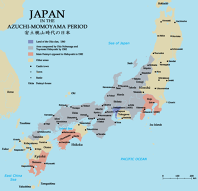
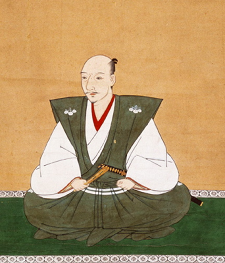
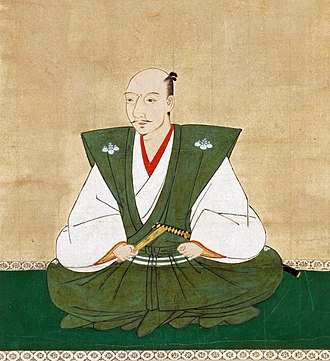
Oda Nobunaga deployed approximately 3,000 ashigaru armed with arquebuses behind wooden palisades at the Battle of Nagashino on June 29, 1575, destroying the Takeda cavalry that had been the most feared military force in Japan. Nobunaga organized his gunners into rotating volleys, allowing continuous fire while each line reloaded. Takeda Katsuyori's mounted samurai charged repeatedly but could not break through the concentrated firepower. Over 10,000 Takeda soldiers were killed, including many of their finest generals. The battle demonstrated that massed firearms had permanently changed Japanese warfare, making the heavily armored mounted samurai charge obsolete. Nagashino accelerated Nobunaga's campaign to unify Japan under a single military government and is sometimes compared to the European transition from medieval to modern warfare.
June 28, 1575
451 years ago
Key Figures & Places




What Else Happened on June 28
Crusader forces broke the siege of Antioch by routing Kerbogha’s army in a decisive field battle. This victory shattered the coalition of local Muslim rulers an…
Muhammed VI seized the Nasrid throne in Granada by orchestrating the assassination of his brother-in-law, Ismail II. This violent coup fractured the ruling dyna…

Ottoman forces under Sultan Murad I defeated a Serbian-led coalition under Prince Lazar Hrebeljanovic at the Battle of Kosovo on June 28, 1389 (June 15 in the J…
Edward wasn't supposed to be king. His father died at Wakefield without ever wearing the crown, and Henry VI still sat on the throne when nineteen-year-old Edwa…
Edward wasn't supposed to be king. He was 18 years old, six-foot-four, and had just watched his father's severed head get mounted on the gates of York with a pa…
France's outnumbered army crushed the Neapolitans and Spanish at Seminara in 1495, and the humiliation hit Gonzalo de Córdoba hard. He'd commanded that losing s…
Talk to History
Have a conversation with historical figures who witnessed this era. Ask questions, explore perspectives, and bring history to life.