

Herschel Discovers Uranus: Solar System Expands Beyond Saturn
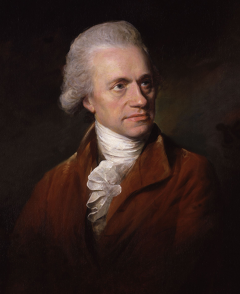
William Herschel was surveying the night sky from his garden in Bath, England, on March 13, 1781, when he noticed a faint object that moved against the background stars. He initially reported it as a comet, but further observation revealed a nearly circular orbit characteristic of a planet. The mathematical astronomer Anders Johan Lexell calculated its distance at roughly 19 times the Earth-Sun distance, confirming it was far beyond Saturn. Herschel wanted to name it 'Georgium Sidus' after King George III, a suggestion that Continental astronomers rejected. The name Uranus, proposed by Johann Bode, eventually won acceptance. The discovery was the first new planet found since antiquity and effectively doubled the known size of the solar system. It also made Herschel famous overnight. George III appointed him Royal Astronomer with an annual salary of 200 pounds, freeing him from his career as a musician and allowing him to dedicate his life to astronomy. His sister Caroline, who assisted him throughout, became the first woman to discover a comet.
March 13, 1781
245 years ago
Key Figures & Places


What Else Happened on March 13
The Praetorian Guard dragged both bodies through Rome's streets before dumping them in the Tiber River. Elagabalus was eighteen when soldiers murdered him in th…
The Roman Senate chose him — not the clergy. Felix III became pope in 483 because Gothic King Odoacer, who'd deposed the last Western Roman emperor seven years …

A small Muslim force of roughly 313 men under Muhammad's command defeated a Meccan army of approximately 1,000 at the wells of Badr on March 13, 624 CE. The bat…
Three hundred thirteen men faced a thousand. Muhammad's followers were outnumbered three-to-one at Badr's wells, seventy miles from Medina, but they'd seized th…
The remains of Saint Nicephorus returned to Constantinople, finding their final resting place in the Church of the Holy Apostles. This ceremonial reburial signa…
Cardinal Gregorio Conti assumed the title of Victor IV, challenging the legitimacy of Pope Innocent II after the death of Anacletus II. This schism deepened the…
Talk to History
Have a conversation with historical figures who witnessed this era. Ask questions, explore perspectives, and bring history to life.