

Truman Signs Marshall Plan: Rebuilding Europe to Stop Communism
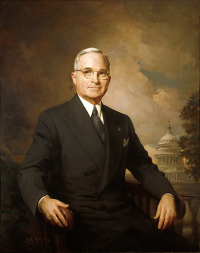
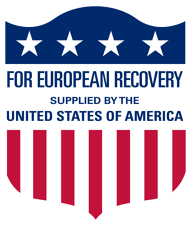
Truman signed the Economic Cooperation Act on April 3, 1948, launching what became known as the Marshall Plan after Secretary of State George Marshall's 1947 Harvard speech proposing it. The program distributed $13.3 billion (roughly $175 billion in today's dollars) across 16 European nations between 1948 and 1952. The largest recipients were the United Kingdom, France, and West Germany. The plan required participating nations to coordinate economic policies, reduce trade barriers, and modernize industrial equipment. It worked spectacularly: Western European industrial output surpassed prewar levels by 1951. The Soviet Union rejected participation and pressured Eastern Bloc nations to do the same, deepening the continental divide.
April 3, 1948
78 years ago
Key Figures & Places
President of the United States
Wikipedia
Harry S. Truman
Wikipedia
Marshall Plan
Wikipedia

Cold War
Wikipedia

Harry S. Truman
Wikipedia

Marshall Plan
Wikipedia

World War II
Wikipedia

Bataan
Wikipedia
President
Wikipedia

George C. Marshall
Wikipedia
Western Europe
Wikipedia

Fiódor Tolbujin
Wikipedia

Baden (Niederösterreich)
Wikipedia

Geschichte Wiens
Wikipedia

Kampf um Alland (1945)
Wikipedia

Vienna offensive
Wikipedia
Philippines
Wikipedia

Battle of Bataan
Wikipedia

British Army
Wikipedia

ميناء بنغازي
Wikipedia
What Else Happened on April 3
Roman consul Publius Postumius Tubertus marched his legions against the Sabines and won a decisive enough victory to earn an ovation, a lesser triumph recorded …
He didn't just take a crown; he grabbed Calakmul's fate by the throat in 686. Yuknoom Yich'aak K'ahk' stepped onto the throne while rival Tikal burned, sparking…
He arrived at Westminster Abbey with only one thing left: his crown. Edward, known for his piety and poverty, didn't just sit on a throne; he sat among men who'…
No one expected a duke to hand over his crown like a birthday gift. In 1077, Emperor Henry IV gave Friuli's lands directly to Patriarch Sighard, creating the fi…
A bishop named Sighardolfo didn't just get a title; he got 2,000 soldiers and a jagged strip of land from Emperor Henry IV. But that power came with blood. For …
France and Spain finalized the Peace of Cateau-Cambrésis, formally concluding the destructive Italian Wars that had ravaged the peninsula for six decades. By re…
Talk to History
Have a conversation with historical figures who witnessed this era. Ask questions, explore perspectives, and bring history to life.