

Venus de Milo Unearthed: Greece's Lost Masterpiece Resurfaces
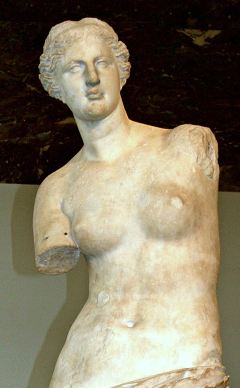
A Greek peasant named Yorgos Kentrotas discovered the Venus de Milo while digging in his field on the island of Melos in April 1820. French naval officer Olivier Voutier happened to be exploring nearby ruins and witnessed the discovery. The statue had been broken into two pieces and separated from its arms, which were never recovered despite multiple searches. French authorities purchased it for 1,000 francs and presented it to Louis XVIII, who donated it to the Louvre. The statue dates to approximately 130-100 BC and is thought to represent Aphrodite. Its missing arms have become part of its mystique, inspiring centuries of speculation about her original pose. The Louvre has never allowed it to leave France.
April 8, 1820
206 years ago
Key Figures & Places




What Else Happened on April 8
He didn't die in battle. Caracalla fell to a lone guard named Martialis, who stabbed him near Carrhae while the emperor was answering nature's call. The Praetor…

The historical Siddhartha Gautama likely attained enlightenment under a Bodhi tree in Bodh Gaya, India, around the 5th century BC, though the precise date is tr…
A six-year-old boy named Chilperic died alongside his father in the quiet town of Blaye. King Charibert II and his infant son were cut down, likely by order of …
Abbasid forces crushed Ya'qub ibn al-Layth’s Saffarid army at the Battle of Dayr al-'Aqul, forcing a chaotic retreat down the Tigris. By halting the Saffarid ad…
Walkelin squeezed into a cathedral that still smelled of wet lime and sawdust. He'd spent fifteen years forcing laborers to haul stone from quarries miles away,…
An excommunication that lasted seven years for a man who already said he agreed with the Pope. Roger II of Sicily backed Anacletus II against Innocent II, then …
Talk to History
Have a conversation with historical figures who witnessed this era. Ask questions, explore perspectives, and bring history to life.