

UN Opens in London: Global Diplomacy Begins
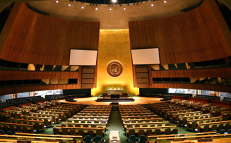
Fifty-one nations gathered in London's Methodist Central Hall on January 10, 1946, determined not to repeat the League of Nations' failure. The General Assembly gave every member state one vote regardless of size, meaning Luxembourg carried the same weight as the Soviet Union on resolutions. This radical equality was balanced by the Security Council, where five permanent members held veto power, a compromise that kept the great powers inside the institution at the cost of frequent paralysis. The first session tackled everything from Iranian sovereignty to the status of refugees, establishing the procedural architecture that still governs international cooperation. Unlike the League, the UN survived because it accepted its own contradictions. It could not prevent the Cold War, but it gave adversaries a permanent forum for talking instead of shooting.
January 10, 1946
80 years ago
Key Figures & Places

What Else Happened on January 10
Julius Caesar marched his Thirteenth Legion across the Rubicon, defying the Roman Senate’s direct order to disband his army. This breach of provincial boundarie…
The imperial throne wasn't just changing hands—it was being seized through cosmic theater. Wang Mang, a cunning court official, didn't just stage a coup; he cla…
Julius Caesar marched his Thirteenth Legion across the Rubicon, defying the Roman Senate’s direct order to disband his army. By crossing this boundary, he commi…
Emperor Galba adopted Lucius Calpurnius Piso Licinianus as his successor, hoping to stabilize a fractured Roman state through a formal transfer of power. Instea…
Fabian ascended to the papacy after a dove reportedly landed on his head during the election, an omen that convinced the gathered crowd of his divine selection.…
A dusty, brutal siege that nobody saw coming. Norman mercenaries—those French warriors who'd become Italy's most unexpected conquerors—thundered into Sicily's m…
Talk to History
Have a conversation with historical figures who witnessed this era. Ask questions, explore perspectives, and bring history to life.