

Greeks Enter Troy: The Horse Deceives a City
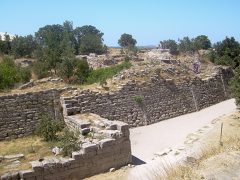
The traditional date for the fall of Troy is April 24, 1184 BC, as calculated by the ancient Greek scholar Eratosthenes. Archaeological excavations at Hisarlik in northwestern Turkey, identified as Troy by Heinrich Schliemann in the 1870s, reveal a city that was indeed destroyed and burned around 1180 BC, the layer designated Troy VIIa. Whether this destruction was caused by a Greek siege, an earthquake, or internal revolt remains debated. Homer's Iliad, composed roughly 400 years after the supposed events, describes a ten-year siege that ended when Greeks hid inside a wooden horse. The Trojan War story became the foundational narrative of Greek culture, spawning the Odyssey and influencing Roman identity through Virgil's Aeneid.
April 24, 1184 BC
Key Figures & Places
What Else Happened on April 24

Thutmose III ascended the Egyptian throne around 1479 BC as a child, but real power immediately passed to his stepmother and aunt, Hatshepsut, who declared hers…
Ten years of siege, one wooden horse hiding two thousand Greeks. When the gates creaked open, Priam's palace burned and his sons fell by the sword. Helen walked…
Eratosthenes pinned 1183 BC as the day Greek ships burned twelve thousand men and women alive inside wooden walls. He didn't care about gods; he counted the dea…
Charles V's horse, Euphrosine, bolted right into a swamp, leaving the Emperor stranded in muddy water while his son-in-law, the Duke of Alba, charged straight t…
Mary, Queen of Scots, wed the Dauphin François at Notre Dame, uniting the French and Scottish crowns under a single Catholic alliance. This marriage intensified…
That first edition cost a mere two cents, yet it carried three pages of gossip, shipping news, and a terrifying warning about smallpox. It wasn't just paper; it…
Talk to History
Have a conversation with historical figures who witnessed this era. Ask questions, explore perspectives, and bring history to life.