

Allies Demand Surrender: Japan Faces Potsdam Declaration
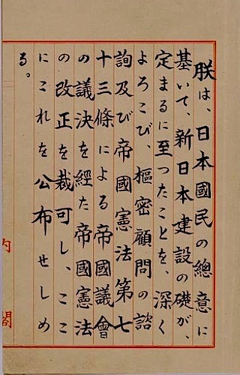
The Potsdam Declaration, issued on July 26, 1945, demanded Japan's unconditional surrender and outlined terms for postwar governance, though General Douglas MacArthur did not arrive to implement them until September 2. The Japanese constitution that MacArthur's staff drafted in one week included Article 9, which renounced war and prohibited Japan from maintaining military forces. Emperor Hirohito accepted a purely ceremonial role. The occupation transformed Japan from a militarist empire into a parliamentary democracy with universal suffrage, land reform, dissolution of the zaibatsu industrial conglomerates, and a reformed education system. The occupation lasted until 1952, but its constitutional and institutional changes remain the foundation of modern Japanese governance.
May 3, 1947
79 years ago
Key Figures & Places
What Else Happened on May 3
Ethnic violence erupted between the Meitei and Kuki Zo communities in Manipur, triggered by disputes over land rights and affirmative action status. This confli…
Bird Jaguar IV ascended the throne of Yaxchilan, ending a ten-year interregnum that had paralyzed the city-state’s leadership. By aggressively commissioning mon…
The ground shook three times in 24 hours, but it was the third quake that dropped Rhodes into the sea. Thirty thousand people died when the city's limestone bui…
The monarch took a new name, João, and ordered his entire court to follow him into baptism. Nkuwu Nzinga of Kongo wasn't conquered—he invited the Portuguese pri…
Columbus had already mapped 700 miles of Cuban coastline when his crew spotted mountains rising from turquoise water. May 5, 1494. He named it Santiago, convinc…
The French called it "Matanzas" too—the same name the Spanish had used for their massacre site, which meant "slaughters." Dominique de Gourgues led 150 Frenchme…
Talk to History
Have a conversation with historical figures who witnessed this era. Ask questions, explore perspectives, and bring history to life.