

Pontiac Attacks Fort Detroit: Frontier War Erupts
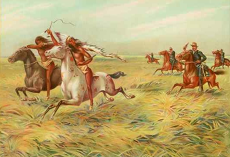
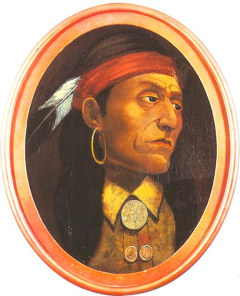
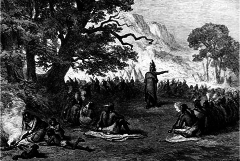
Chief Pontiac entered Fort Detroit on May 7, 1763, with 300 Ottawa warriors carrying weapons hidden beneath their blankets, planning to seize the British garrison by surprise. The plan failed because the British commander, Major Henry Gladwin, had been warned. Soldiers stood at their posts with loaded muskets, cannon were trained on the gate, and Pontiac, realizing the ambush had been betrayed, withdrew without firing a shot. The siege that followed lasted five months and triggered the most successful Indigenous military resistance in North American colonial history. The conflict grew from deep grievances. France's defeat in the Seven Years' War had transferred the Great Lakes and Ohio Valley to Britain in 1760, and British policy toward Indigenous nations was drastically different from the French approach. Where the French had maintained alliances through gift-giving, trade partnerships, and cultural accommodation, British General Jeffrey Amherst cut off diplomatic gifts, restricted trade in gunpowder and ammunition, and permitted settlers to encroach on native lands. Pontiac, an Ottawa war chief with exceptional diplomatic skills, assembled a coalition of Ottawas, Ojibwes, Potawatomis, Hurons, and other nations that had never coordinated military action on this scale. Between May and July 1763, Indigenous forces captured eight of twelve British frontier forts, killed or captured hundreds of soldiers and settlers, and threatened to drive the British back across the Appalachian Mountains. Fort Detroit held out through the summer, resupplied by ships on the river that Pontiac's warriors could harass but not block. British reinforcements eventually broke the siege, and the coalition began to fracture as nations negotiated separate terms. Pontiac himself did not formally make peace until 1766. The rebellion's most lasting consequence was the Royal Proclamation of 1763, in which King George III drew a line along the Appalachian ridge and prohibited colonial settlement west of it. The proclamation acknowledged, for the first time in British law, Indigenous territorial rights. American colonists viewed the line as an intolerable restriction on their expansion, adding a grievance that contributed to the Revolutionary War twelve years later.
May 7, 1763
263 years ago
Key Figures & Places
What Else Happened on May 7
The garrison commander at Diocaesarea didn't wait for permission. When Gallus settled into Antioch's imperial palace in 351, Jewish rebels seized the city's wea…
The Roman Caesar didn't realize Antioch's Jews had already been pushed to the edge when he arrived in 351. Constantius Gallus had a reputation—his cousin Julian…
The dome didn't just crack—it pancaked into the nave, twenty thousand tons of brick and mortar crushing the floor where emperors had stood. A mild earthquake th…
The Second Council of Lyon convened to establish the papal conclave, mandating that cardinals be locked in a room until they elected a new pontiff. This strict …
Cardinal Pierre Roger ascended to the papacy as Clement VI, transforming Avignon into a lavish center of European art and diplomacy. His reign solidified the Av…

A crossbow bolt struck Joan of Arc between the neck and shoulder as she led an assault on the Tourelles fortification at Orleans on May 7, 1429. She pulled the …
Talk to History
Have a conversation with historical figures who witnessed this era. Ask questions, explore perspectives, and bring history to life.