

Marconi Patents Radio: The Dawn of Wireless Communication
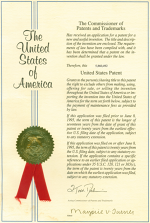
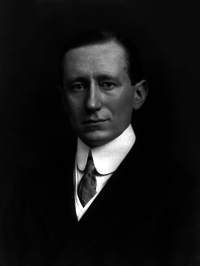
Guglielmo Marconi filed British patent No. 12039 on June 2, 1896, for "Improvements in transmitting electrical impulses and signals and in apparatus there-for," effectively patenting wireless telegraphy. He was 22 years old. Marconi had conducted initial experiments at his father's estate near Bologna, Italy, but moved to England where the commercial potential was greater. He transmitted the first transatlantic radio signal from Poldhu, Cornwall, to Signal Hill, Newfoundland, on December 12, 1901, using Morse code. The achievement was initially doubted but eventually confirmed. Radio transformed maritime safety (the Titanic's distress calls in 1912 saved 710 lives), military communications, and eventually spawned the broadcasting industry. Marconi shared the 1909 Nobel Prize in Physics with Karl Ferdinand Braun.
June 2, 1896
130 years ago
Key Figures & Places
What Else Happened on June 2
Karl Nobiling didn't just shoot the Kaiser — he shot him twice, from a second-floor window in Berlin, loaded with birdshot. Wilhelm I was 81 years old and survi…
A teenage emperor grabbed a sword and marched into the street himself. Cao Mao, 20 years old, knew Sima Zhao controlled everything — the army, the court, his ow…
Vandal forces breached the walls of Rome, systematically stripping the city of its wealth and sacred treasures over fourteen days of relentless looting. This or…
The Caliphate of Córdoba was supposed to be untouchable. At its peak under Abd al-Rahman III, it was the most sophisticated state in Western Europe — libraries,…

Crusader forces under Bohemond of Taranto captured Antioch on June 3, 1098, after a seven-month siege during the First Crusade. The siege had reduced the Crusad…
Virginia's original charter didn't just claim a colony. It claimed a continent. Issued by James I in 1606 and expanded in 1609, the grant stretched from the Atl…
Talk to History
Have a conversation with historical figures who witnessed this era. Ask questions, explore perspectives, and bring history to life.