

Miranda Rights Established: Supreme Court Protects Suspects
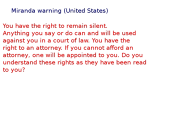
The Supreme Court ruled 5-4 in Miranda v. Arizona on June 13, 1966, establishing that suspects must be informed of their constitutional rights before custodial interrogation. Ernesto Miranda had confessed to kidnapping and rape after two hours of police questioning without being told he had the right to remain silent or to have an attorney present. Chief Justice Earl Warren wrote the majority opinion, specifying the exact warnings police must give. The four dissenters argued the ruling would hamper law enforcement. Studies have shown that most suspects waive their Miranda rights and speak to police anyway, suggesting the warnings' practical impact on conviction rates has been minimal. Miranda himself was retried without the confession, convicted on other evidence, and paroled in 1972. He was stabbed to death in a bar fight in 1976.
June 13, 1966
60 years ago
Key Figures & Places
What Else Happened on June 13
Two emperors who hated each other agreed on exactly one thing. Constantine and Licinius met in Milan in February 313, sealed a political marriage, and hammered …
He left home at 21 thinking he'd be back in a year. Ibn Battuta never returned. What started as a hajj to Mecca stretched into 75,000 miles across 44 modern cou…
The oldest military alliance still active today wasn't forged by grand diplomacy — it started as a transaction. England needed wool trade routes. Portugal neede…
Angry mobs led by Wat Tyler stormed and incinerated the Savoy Palace, the opulent London residence of John of Gaunt. By destroying the symbol of royal corruptio…
Henry VIII built the biggest warship on Earth and named it after God. Henry Grace à Dieu — "Henry, Grace of God" — wasn't subtle. At 1,500 tons and carrying 186…

Martin Luther married Katharina von Bora on June 13, 1525, in a ceremony at the Black Cloister in Wittenberg. Katharina was one of twelve nuns who had escaped t…
Talk to History
Have a conversation with historical figures who witnessed this era. Ask questions, explore perspectives, and bring history to life.