

Napoleon Wins Marengo: France Reclaims Italy
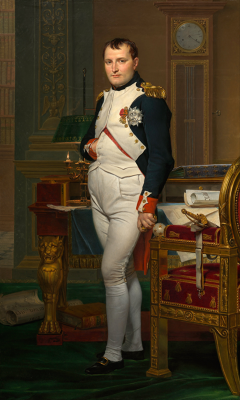
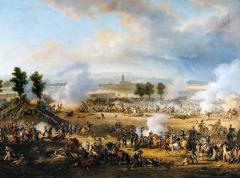
Napoleon Bonaparte won the Battle of Marengo on June 14, 1800, but only barely. His forces were being routed by Austrian General Michael von Melas when General Louis Desaix arrived with reinforcements at 5 PM. Desaix launched a counterattack that turned defeat into victory but was killed leading the charge, shot through the heart. Napoleon later said "Why am I not allowed to weep?" The victory restored French control over northern Italy, which had been lost during Napoleon's Egyptian campaign. Politically, it cemented Napoleon's position as First Consul and silenced his domestic critics. Napoleon subsequently rewrote the official account of the battle several times, each version enhancing his own role and minimizing the near-disaster. The chicken dish "Chicken Marengo" is supposedly what his chef improvised from local ingredients after the battle.
June 14, 1800
226 years ago
Key Figures & Places

What Else Happened on June 14
Henry the Lion established Munich by destroying a rival bridge to force merchant traffic through his own toll-paying settlement on the Isar. This calculated mov…
Half of England belonged to a French prince, and almost nobody stopped him. Louis of France crossed the Channel in 1216 at the invitation of English barons furi…
The Song Dynasty crowned a seven-year-old emperor in a city they were already fleeing. Zhao Shi became Emperor Duanzong not in a palace but in exile, Fuzhou ser…
Kublai Khan's navy never saw it coming. Prince Trần Quang Khải didn't wait for the Mongols to land — he hit them on the water at Chương Dương, where the fleet w…
Nayan thought the old blood still meant something. As a direct descendant of Genghis Khan's brothers, he commanded 60,000 warriors and believed Mongol tradition…
A fourteen-year-old boy rode out to meet an army. Richard II, barely a king, faced thousands of furious peasants at Blackheath while his advisors hid behind Tow…
Talk to History
Have a conversation with historical figures who witnessed this era. Ask questions, explore perspectives, and bring history to life.