

Magna Carta Signed: King John Grants Rights
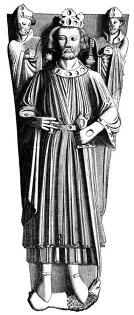
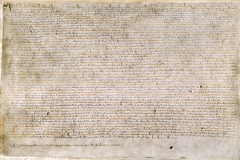
English barons forced King John to affix his seal to Magna Carta at Runnymede on June 15, 1215, after a rebellion triggered by his heavy taxation and arbitrary justice. The charter contained 63 clauses, most dealing with feudal land rights and tax limits. Clause 39, guaranteeing that no free man would be imprisoned "except by the lawful judgment of his peers or by the law of the land," became the foundation of due process. Clause 40, "to no one will we sell, to no one will we deny or delay right or justice," remains in English law today. Pope Innocent III annulled the charter within months, and civil war erupted. Magna Carta was reissued with modifications after John's death in 1216 and became embedded in English law. Its principles influenced the US Constitution, the Universal Declaration of Human Rights, and legal systems worldwide.
June 15, 1215
811 years ago
Key Figures & Places
What Else Happened on June 15
Assyrian astronomers recorded a total solar eclipse on June 15, 763 BC, noting the event in the limmu lists of King Ashur-dan III. This precise observation prov…
Pope Sergius II anointed Louis II as King of Italy in Rome, formalizing the Carolingian grip on the Italian peninsula. This coronation solidified the alliance b…
Robert I won the battle and still lost everything. He defeated Charles the Simple's forces at Soissons in 923, then took an arrow or sword blow — accounts disag…
King Magnus V fell in the freezing waters of Sognefjord during the Battle of Fimreite, ending his long struggle for the Norwegian throne. His defeat cleared the…
The fleet that decided Norway's future wasn't won by numbers — Sverre's Birkebeiner force was massively outnumbered. But Sverre had a trick: he rammed Magnus's …
King John affixed his seal to the Magna Carta at Runnymede, bowing to pressure from rebellious barons to curb his absolute power. This charter established the p…
Talk to History
Have a conversation with historical figures who witnessed this era. Ask questions, explore perspectives, and bring history to life.