

North Invades South: Korean War Begins
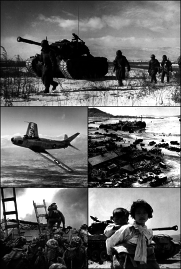
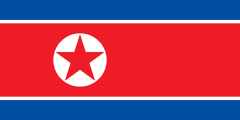
North Korean People's Army forces crossed the 38th parallel on June 25, 1950, invading South Korea with 75,000 troops supported by Soviet-supplied T-34 tanks. The South Korean army, lacking tanks and heavy weapons, was quickly overwhelmed. Seoul fell on June 28. The United Nations Security Council passed a resolution authorizing military force to repel the invasion, with the Soviet Union unable to veto because it was boycotting the Council over China's representation. General Douglas MacArthur's daring amphibious landing at Inchon on September 15 cut North Korean supply lines and recaptured Seoul. The advance to the Chinese border provoked China's intervention with 300,000 troops in November, pushing the front back to the 38th parallel. The war killed over three million people and ended with an armistice in 1953 that remains in effect; no peace treaty has ever been signed.
June 25, 1950
76 years ago
Key Figures & Places



What Else Happened on June 25
The Burgundians thought they had allies. They didn't. At Vézeronce in 524, the Frankish forces under Chlodomer's brothers crushed the Burgundian army — but Chlo…
The Burgundians crushed the Frankish army at the Battle of Vézeronce, securing a temporary reprieve for their kingdom against Merovingian expansion. This victor…
Three brothers tore the Carolingian Empire apart in a single afternoon. At Fontenay-en-Puisaye, Charles the Bald and Louis the German crushed Lothair I's forces…
Venetian galleys destroyed a larger Genoese fleet at the Battle of Acre during the War of Saint Sabas, a conflict between Italian merchant republics over commer…
Authorities in Schaffhausen tortured and executed thirty Jewish residents after accusing them of the blood libel, the false charge that Jews murdered Christian …
Seven German princes handed Charles V a document that was supposed to get them burned. Melanchthon wrote it — not Luther, who was banned from Augsburg entirely,…
Talk to History
Have a conversation with historical figures who witnessed this era. Ask questions, explore perspectives, and bring history to life.