

Johnson Signs Civil Rights Act: Segregation Outlawed
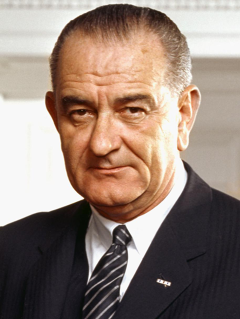
Lyndon Johnson signed the bill using 75 pens, handing one to Martin Luther King Jr., who stood directly behind him. The Civil Rights Act of 1964 outlawed segregation in hotels, restaurants, theaters, and public facilities nationwide, demolished the Jim Crow system that had enforced racial separation for nearly a century, and barred employment discrimination based on race, color, religion, sex, or national origin. The "sex" provision was added by a Virginia congressman who thought it would kill the bill. It passed anyway. Enforcement fell to a new agency, the EEOC, which received more than 8,000 complaints in its first year alone, proving that legal change and lived reality remained far apart.
July 2, 1964
62 years ago
Key Figures & Places
President of the United States
Wikipedia
Lyndon B. Johnson
Wikipedia
Civil Rights Act of 1964
Wikipedia

Civil rights movement
Wikipedia

Lyndon B. Johnson
Wikipedia

Civil Rights Act of 1964
Wikipedia

Washington, D.C.
Wikipedia
Racismo en Estados Unidos
Wikipedia

South Carolina
Wikipedia

United States Congress
Wikipedia

Jim Crow
Wikipedia
President
Wikipedia

Benjamin Harrison
Wikipedia

United States Senate
Wikipedia
Sherman Antitrust Act
Wikipedia
Monopoly
Wikipedia
Bürgerrechtsbewegungen
Wikipedia
What Else Happened on July 2
Valentinian III turned eighteen in 437, old enough to rule the Western Roman Empire alone. His mother Galla Placidia officially stepped back from her fifteen-ye…
Two brothers died in an ambush at the palace's north gate, arrows finding their marks before they could draw swords. Li Shimin killed them himself on July 2, 62…
Six bodies, three generations, one hillside. Emperor Zhongzong moved them all to Mount Liang in 706—his father Gaozong, his mother Wu Zetian (China's only femal…
Robert the Strong falls at Brissarthe, shattering Frankish control over Neustria and leaving the region vulnerable to Viking raids for decades. This defeat forc…
The soldiers wouldn't wait for Constantinople's approval. On July 2, 963, the imperial army surrounded their brilliant general Nicephorus Phocas on the Cappadoc…
Albert I of Habsburg defeated Adolf of Nassau-Weilburg at the Battle of Göllheim, ending Adolf’s reign as King of the Romans. This victory secured the Habsburg …
Talk to History
Have a conversation with historical figures who witnessed this era. Ask questions, explore perspectives, and bring history to life.