

Independence Declared: The United States Is Born
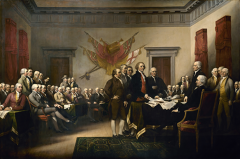
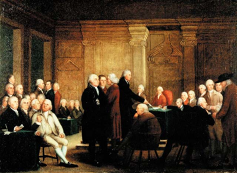
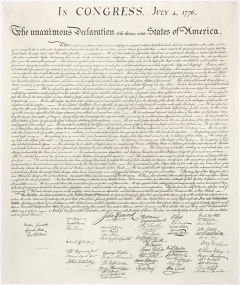
Thomas Jefferson spent seventeen days writing and rewriting a document that fifty-six men would eventually sign, knowing it marked them for hanging if the Revolution failed. The Declaration of Independence, ratified on July 4, 1776, did more than announce a political separation. It articulated a philosophy: that governments derive their power from the consent of the governed, and that people possess inherent rights no ruler can revoke. Congress actually voted for independence on July 2, but the formal document wasn't approved until two days later. John Adams predicted Americans would celebrate the second, not the fourth. He was wrong about the date but right about the fireworks.
July 4, 1776
250 years ago
Key Figures & Places
What Else Happened on July 4
Epaminondas led the Thebans to a decisive victory over the Spartans at the Battle of Mantinea, though he died in the final charge. His tactical brilliance shatt…
A thirteen-year-old emperor signed away his throne to his fifteen-year-old sister. Aelia Pulcheria didn't wait for permission—she proclaimed herself Augusta in …
The peace lasted exactly ten years—unusual for medieval Italy, where treaties typically collapsed within months. Prince Sicard of Benevento and Duke Andrew II o…
The pope needed witnesses. Actual people who'd seen miracles. So when John XV canonized Ulrich of Augsburg on January 31, 993, he required testimony—sworn state…

Chinese court astronomers recorded a "guest star" so bright it cast shadows at noon for 23 consecutive days. Arab physician Ibn Butlan saw it too, 5,000 miles a…
The infant prince died, and his uncle Jordan II took the throne of Capua within days. No debate. No ceremony worth recording. Just a smooth transfer of power in…
Talk to History
Have a conversation with historical figures who witnessed this era. Ask questions, explore perspectives, and bring history to life.