

Draft Riots Erupt: New York's Deadliest Uprising
New York's Draft Riots began on July 13, 1863, when working-class mobs attacked the Provost Marshal's office to protest a new conscription law that allowed wealthy men to buy their way out of service for $300. The violence quickly turned racial: rioters burned the Colored Orphan Asylum, lynched Black men from lampposts, and destroyed African American homes and businesses across lower Manhattan. For three days, police and militia were overwhelmed. Federal troops, some arriving directly from Gettysburg, finally restored order. Estimates of the dead range from 120 to over 1,000. The riots exposed the explosive intersection of class resentment, racial hatred, and opposition to the Civil War.
July 13, 1863
163 years ago
Key Figures & Places
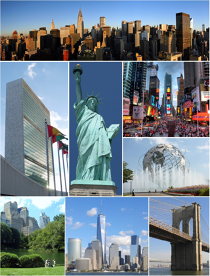
New York City
Wikipedia
United States history
Wikipedia

conscription
Wikipedia
New York Draft Riots
Wikipedia
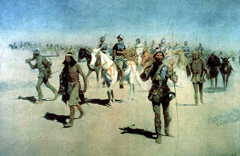
history of the United States
Wikipedia
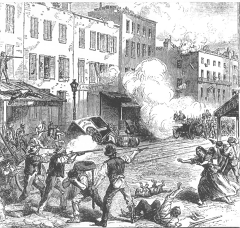
New York City draft riots
Wikipedia

American Civil War
Wikipedia

New York City draft riots
Wikipedia

New York City
Wikipedia

Conscription
Wikipedia

Union
Wikipedia
What Else Happened on July 13
Mario Götze volleyed home a precise strike in the 113th minute to secure Germany’s fourth World Cup title against Argentina. This victory made Germany the first…
English forces captured King William I of Scotland at Alnwick during the Revolt of 1173-1174, forcing him to sign the humiliating Treaty of Falaise. The treaty …
Eight-year-old Alexander III ascended the Scottish throne at Scone, following the sudden death of his father. His reign secured the independence of the Scottish…
Fifty knights in white mantles with red crosses lay dead in a Lithuanian marsh, their horses drowning beside them. The Livonian Order—those German crusaders who…
Zhu Di's forces seized Nanjing on July 13, 1402, compelling the city to surrender without resistance and vanishing the Jianwen Emperor from history. This decisi…
John of Kastav completed his intricate cycle of frescoes in the Holy Trinity Church, immortalizing the Danse Macabre in vivid detail. By depicting figures from …
Talk to History
Have a conversation with historical figures who witnessed this era. Ask questions, explore perspectives, and bring history to life.