

Treaty of Berlin: Balkans Redrawn, Nations Freed
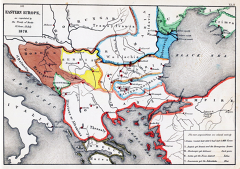
Europe's most powerful statesmen carved up the Ottoman Empire's Balkan territories in a single month of negotiations, redrawing borders that would generate wars for the next century. The Treaty of Berlin, signed on July 13, 1878, replaced the earlier Treaty of San Stefano and dramatically reduced Russia's gains from its recent war against the Ottomans. Chancellor Otto von Bismarck hosted the congress as an "honest broker," though his primary goal was preventing a general European war over the Eastern Question. Russia had crushed the Ottoman Empire in the war of 1877-78, and the Treaty of San Stefano created a massive Bulgarian state stretching from the Danube to the Aegean Sea. Britain and Austria-Hungary viewed this "Big Bulgaria" as a Russian satellite that would dominate the Balkans and threaten their own strategic interests. Britain's Benjamin Disraeli sailed a fleet to the eastern Mediterranean and Austria-Hungary mobilized troops. War between the great powers appeared imminent. Bismarck convened the Congress of Berlin in June 1878, gathering representatives from Britain, Russia, France, Austria-Hungary, Italy, and the Ottoman Empire. The negotiations produced a radically different map. Bulgaria was split into three parts: a small autonomous principality, the semi-autonomous province of Eastern Rumelia, and Macedonia returned to direct Ottoman control. Romania, Serbia, and Montenegro gained full independence. Austria-Hungary received the right to occupy Bosnia and Herzegovina, and Britain took Cyprus. The treaty satisfied no one completely, which Bismarck considered a sign of successful diplomacy. Russia felt cheated of its battlefield victories and nursed a lasting grievance against both Bismarck and Austria-Hungary. The new Balkan states immediately began plotting to expand at Ottoman expense. Bulgaria absorbed Eastern Rumelia in 1885 and spent decades pursuing Macedonia. Austria-Hungary's annexation of Bosnia in 1908 provoked a crisis that foreshadowed the events of 1914. The borders drawn in Berlin proved to be fault lines along which the twentieth century's conflicts would erupt.
July 13, 1878
148 years ago
Key Figures & Places
What Else Happened on July 13
Mario Götze volleyed home a precise strike in the 113th minute to secure Germany’s fourth World Cup title against Argentina. This victory made Germany the first…
English forces captured King William I of Scotland at Alnwick during the Revolt of 1173-1174, forcing him to sign the humiliating Treaty of Falaise. The treaty …
Eight-year-old Alexander III ascended the Scottish throne at Scone, following the sudden death of his father. His reign secured the independence of the Scottish…
Fifty knights in white mantles with red crosses lay dead in a Lithuanian marsh, their horses drowning beside them. The Livonian Order—those German crusaders who…
Zhu Di's forces seized Nanjing on July 13, 1402, compelling the city to surrender without resistance and vanishing the Jianwen Emperor from history. This decisi…
John of Kastav completed his intricate cycle of frescoes in the Holy Trinity Church, immortalizing the Danse Macabre in vivid detail. By depicting figures from …
Talk to History
Have a conversation with historical figures who witnessed this era. Ask questions, explore perspectives, and bring history to life.