

Versailles Opens: The Peace Conference That Failed
Thirty-two nations sent delegates to the Palace of Versailles in January 1919 to redraw the map of a world shattered by four years of industrialized slaughter. The 'Big Four' of Wilson, Clemenceau, Lloyd George, and Orlando dominated proceedings, but their agendas clashed violently. Wilson wanted self-determination and a League of Nations. Clemenceau wanted Germany crushed and paying reparations for generations. Lloyd George wanted a balance between punishment and stability. The resulting treaty satisfied nobody completely. Germany lost 13 percent of its territory and all overseas colonies. The war guilt clause, Article 231, forced Germany to accept sole responsibility for the conflict. Reparations were set at 132 billion gold marks, a sum so crushing that economist John Maynard Keynes predicted it would guarantee another war. He was right within twenty years.
January 18, 1919
107 years ago
Key Figures & Places

France
Wikipedia
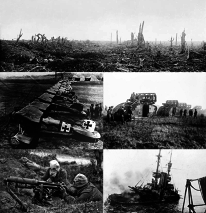
World War I
Wikipedia
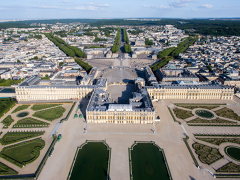
Palace of Versailles
Wikipedia
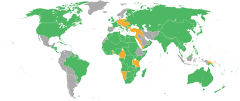
Paris Peace Conference, 1919
Wikipedia
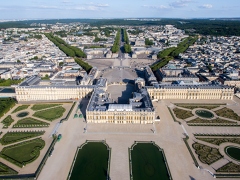
Versailles
Wikipedia

World War I
Wikipedia

Paris Peace Conference (1919–1920)
Wikipedia

Palace of Versailles
Wikipedia

Wilhelm I
Wikipedia

proclaimed
Wikipedia

Hall of Mirrors
Wikipedia
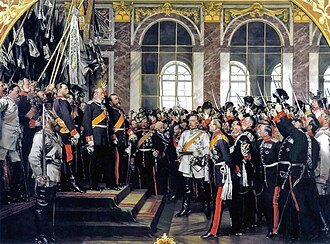
Franco-Prussian War
Wikipedia

German Emperor
Wikipedia

Constitution of the German Confederation (1871)
Wikipedia

Otto von Bismarck
Wikipedia

Prussia
Wikipedia

Kaiser
Wikipedia

Frederick I of Prussia
Wikipedia

German Empire
Wikipedia

Liste des monarques de Prusse
Wikipedia

Versailles, Yvelines
Wikipedia

Histoire de Berlin
Wikipedia

Alt-Kölln
Wikipedia

Berlin-Friedrichswerder
Wikipedia
Dorotheenstadt
Wikipedia
Friedrichstadt (Berlin)
Wikipedia

Brandenburg–Prussia
Wikipedia

Selbstkrönung
Wikipedia

Königsberg
Wikipedia
Kingdom of Prussia
Wikipedia

Königskrönung Friedrichs III. von Brandenburg
Wikipedia
Königsberger Schloss
Wikipedia

France
Wikipedia
What Else Happened on January 18
Roman aristocrats in Gaul proclaimed General Magnentius emperor, directly challenging the unpopular rule of Constans. This usurpation triggered a brutal civil w…
The emperor's own bodyguard turned assassin. Magnentius, a burly Frankish general with a reputation for brutality, didn't just overthrow Constans—he murdered hi…
A seven-year-old emperor? Barely old enough to read, yet wearing imperial purple. Leo II inherited the Byzantine throne through pure bloodline, but his moment o…
The Byzantine emperor's back was against the wall. Justinian I faced total overthrow as chariot racing fans—divided into rival "Blue" and "Green" fan factions—s…
Emperor Huizong abdicated the Song Dynasty throne to his son, Qinzong, in a desperate attempt to shift responsibility for the encroaching Jurchen Jin army. This…
A wedding to end a war. Elizabeth wore white silk—rare then—and the court held its breath. This wasn't just a marriage; it was a human truce that would close th…
Talk to History
Have a conversation with historical figures who witnessed this era. Ask questions, explore perspectives, and bring history to life.