

Yellow Ford Rout: O'Neill Destroys English Force
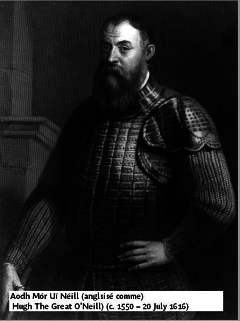
Hugh O'Neill's forces annihilated an English army of 4,000 men at the Yellow Ford on the River Callan on August 14, 1598, inflicting the worst English military defeat in Ireland during the entire Tudor period. The battle killed the English commander Henry Bagenal, destroyed the myth of English military supremacy in Ireland, and transformed a regional rebellion into a war that threatened England's control of the island. O'Neill, Earl of Tyrone, had spent years cultivating a public image of loyalty to the English Crown while secretly building an army modeled on European professional forces. Unlike earlier Irish lords who relied on traditional light infantry and cavalry, O'Neill trained his men in pike-and-shot tactics, equipped them with firearms purchased from Scotland and Spain, and organized them into disciplined formations capable of standing against English troops in open battle. Bagenal marched north from Armagh to relieve the besieged English garrison at the Blackwater Fort, leading a force of roughly 4,000 soldiers in a column stretched across difficult terrain. O'Neill had prepared the ground carefully, digging trenches across the line of march and positioning his forces on favorable ground near the ford. As the English column approached, its units became separated by hedgerows and boggy ground. O'Neill's musketeers and pikemen struck the scattered English regiments in succession. The battle killed approximately 830 English soldiers, including Bagenal himself, hit by a musket ball after raising his visor. Hundreds more were wounded or deserted. The defeat panicked the English administration in Dublin and forced Queen Elizabeth I to dispatch the Earl of Essex with the largest army sent to Ireland in the Tudor era. Essex's subsequent failure led to his disgrace and execution, and the Nine Years' War dragged on until 1603, when O'Neill finally submitted after learning that Elizabeth had died. The war's conclusion led to the Flight of the Earls and the Plantation of Ulster, events whose consequences shaped Irish and British history for centuries.
August 14, 1598
428 years ago
Key Figures & Places

England
Wikipedia

Ireland
Wikipedia
Earl
Wikipedia
Nine Years War (Ireland)
Wikipedia
Battle of the Yellow Ford
Wikipedia
Hugh O'Neill, 2nd Earl of Tyrone
Wikipedia
County Tyrone
Wikipedia

Henry Bagenal
Wikipedia
Hugh O'Neill, Earl of Tyrone
Wikipedia
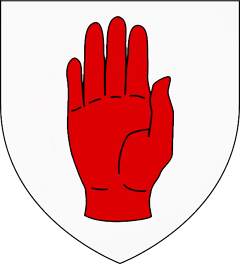
Nine Years' War
Wikipedia
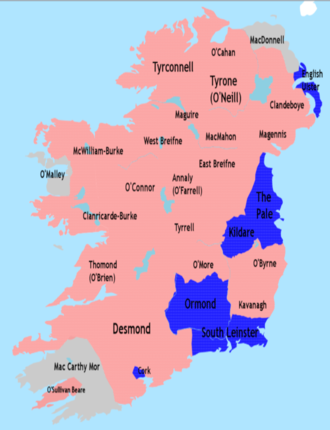
Nine Years' War (Ireland)
Wikipedia

Battle of the Yellow Ford
Wikipedia

Hugh O'Neill, Earl of Tyrone
Wikipedia

Henry Bagenal
Wikipedia
What Else Happened on August 14
Huo Guang and fellow officials thrust articles of impeachment against Emperor Liu He before Empress Dowager Shangguan, compelling her to depose the ruler just t…
Octavian held the second of his three consecutive Roman triumphs celebrating the Dalmatian campaigns in 29 BC. The three-day spectacle — Dalmatia, Actium, Egypt…
Macbeth killed King Duncan I of Scotland in battle near Elgin in 1040 — not in his bed, as Shakespeare later imagined. Macbeth ruled Scotland competently for 17…
The Taira clan carried a child emperor and the imperial regalia out of Kyoto and ran. It was 1183. The Minamoto were coming. Taira no Munemori made the decision…
Genoese forces lure the Venetian galley fleet east toward the Levant, then ambush and seize their entire trade convoy at the Battle of Saseno. This crushing blo…
Count Adolf VIII of Berg granted town privileges to Dusseldorf in 1288, transforming a small fishing village on the Dussel River into a chartered town. The deci…
Talk to History
Have a conversation with historical figures who witnessed this era. Ask questions, explore perspectives, and bring history to life.