

Wright Flyer Crashes: First Aviation Fatality
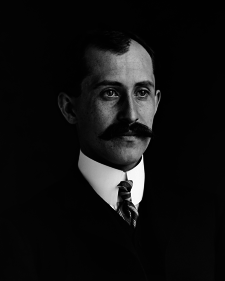
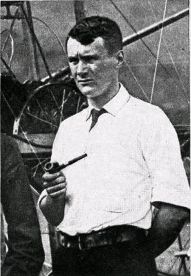
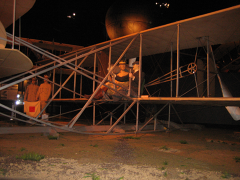
Orville Wright was demonstrating the Military Flyer for the U.S. Army at Fort Myer, Virginia, on September 17, 1908, with Lieutenant Thomas Selfridge as his passenger, when a propeller blade cracked and severed a guy wire controlling the rudder. The aircraft nose-dived from 75 feet. Selfridge was killed instantly, his skull fractured by a wooden strut. He became the first person to die in a powered airplane crash. Wright suffered a broken left leg and four broken ribs. The accident forced the Army to require pilots to wear helmets and established crash investigation as a formal practice. Selfridge's death demonstrated that aviation, still in its infancy, would demand both courage and systematic safety protocols.
September 17, 1908
118 years ago
Key Figures & Places
What Else Happened on September 17
Remistus had been magister militum — essentially commander of the Western Roman army — but by 456 that title meant less than it once had. A Gothic force besiege…
Alfonso VII was three years old when his father died, and his mother was immediately pressured to remarry and cede control. He spent his childhood under the pro…
Emperor Manuel I Komnenos had been pushing into Anatolia for years, reclaiming territory, winning battles, dreaming of a restored empire. Then at Myriokephalon …
Mary of Hungary was crowned 'king' — not queen, but king — in September 1382, because the Hungarian nobility didn't have a mechanism for a female ruler and refu…
Piotr Dunin’s forces crushed the Teutonic Order at the Battle of Świecino, shattering the Knights' military dominance in the region. This victory forced the Ord…
Polish forces routed the Teutonic Knights at Swiecino during the Thirteen Years' War, capturing the Order's commander and shattering their remaining military st…
Talk to History
Have a conversation with historical figures who witnessed this era. Ask questions, explore perspectives, and bring history to life.