

Gregorian Calendar Debuts: Pope Fixes the Year
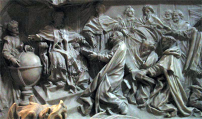
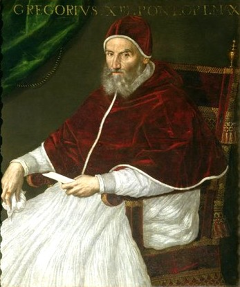
October 4, 1582, was followed immediately by October 15 in Italy, Spain, Portugal, and Poland, as Pope Gregory XIII erased ten days from the calendar to correct a mathematical error that had been accumulating for sixteen centuries. Citizens went to sleep on a Thursday and woke up on a Friday a week and a half later. The Gregorian calendar reform was the largest coordinated adjustment of civil timekeeping in human history, and the resulting calendar remains the global standard today. The problem was astronomical. The Julian calendar, introduced by Julius Caesar in 46 BC, assumed a year was exactly 365.25 days long. The actual solar year is about 11 minutes shorter. That tiny discrepancy, compounding over centuries, had shifted the calendar roughly ten days out of alignment with the seasons by the 1500s. Easter, which was supposed to fall near the spring equinox, was drifting steadily later. For a church that organized its entire liturgical year around Easter's date, this was an urgent problem. Gregory's reform, designed by the Calabrian physician and astronomer Aloysius Lilius and refined by the Jesuit mathematician Christopher Clavius, made two key changes. First, it skipped ten days to realign the calendar with the equinox. Second, it adjusted the leap year rule: years divisible by 100 would no longer be leap years unless they were also divisible by 400. This elegant fix reduced the annual error to just 26 seconds — the Gregorian calendar will not drift a full day from the solar year for approximately 3,236 years. Catholic nations adopted the new calendar immediately, but Protestant and Orthodox countries resisted for centuries, viewing it as a papal power grab. The British Empire didn't switch until 1752, by which point eleven days had to be dropped, reportedly prompting mobs to demand "Give us our eleven days!" Russia held out until 1918, Greece until 1923, and some Orthodox churches still use the Julian calendar for liturgical purposes. The transition created lasting confusion in historical dating, forcing scholars to specify whether a date is "Old Style" or "New Style."
October 15, 1582
444 years ago
Key Figures & Places


What Else Happened on October 15
Belisarius entered Carthage on foot, leading his army through the gates the Vandals had abandoned. He'd recaptured North Africa for Byzantium in a single campai…
The Witan proclaims Edgar the Ætheling king after Harold II falls at Hastings, yet this coronation remains a hollow gesture since they never crown him. Edgar co…
Edgar the Ætheling was proclaimed King of England after Harold died at Hastings. He was fifteen, the last male member of the royal house. He was never crowned. …
Henry of Flanders led 260 Latin knights against Theodore Lascaris and 2,000 Byzantine cavalry at the Rhyndacus River. The Latins had conquered Constantinople ei…
Ottoman forces abandoned the Siege of Vienna after failing to breach the city walls, signaling the end of their rapid expansion into Central Europe. This retrea…
Suleiman the Magnificent besieged Vienna for three weeks in 1529 with 120,000 troops, expecting the city to surrender. It didn't. His siege guns were stuck in m…
Talk to History
Have a conversation with historical figures who witnessed this era. Ask questions, explore perspectives, and bring history to life.