

Marconi Opens Transatlantic Wireless: 1907
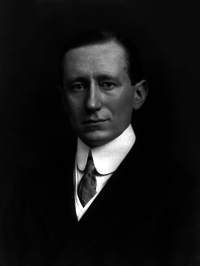
Guglielmo Marconi's company opened the first commercial transatlantic wireless telegraph service on October 17, 1907, linking Clifden on Ireland's western coast with Glace Bay in Nova Scotia. Messages that had previously required days to cross the Atlantic by cable ship could now travel at the speed of light through empty air. The service marked the moment wireless communication stopped being an experiment and became a business. Marconi had first demonstrated transatlantic wireless transmission in December 1901, receiving the letter "S" in Morse code at Signal Hill in Newfoundland from a transmitter in Cornwall, England. That achievement, while historically celebrated, was a one-directional demonstration under ideal conditions, not a reliable two-way service. Six years of engineering work followed, during which Marconi and his team built increasingly powerful transmitters, developed better antennas, and solved the problems of atmospheric interference and signal fading that made long-distance wireless unreliable. The Clifden-Glace Bay service handled commercial messages at rates competitive with submarine telegraph cables, which had monopolized transatlantic communication since 1866. Wireless had a crucial advantage: it required no physical cable across the ocean floor, making it cheaper to establish and impossible to cut. The strategic implications were obvious — nations with wireless could communicate even if an enemy severed their undersea cables, a vulnerability that would prove significant in both world wars. Marconi's commercial success accelerated the adoption of wireless technology worldwide. Within a few years, every major ocean liner carried wireless equipment, and the technology proved lifesaving when ships like the Republic (1909) and the Titanic (1912) transmitted distress signals. Maritime wireless regulations followed, requiring ships to maintain 24-hour radio watches. Marconi shared the 1909 Nobel Prize in Physics and continued developing radio technology until his death in 1937. His 1907 commercial service was the bridge between laboratory curiosity and the telecommunications revolution that radio, television, and eventually wireless internet would build upon.
October 17, 1907
119 years ago
Key Figures & Places




What Else Happened on October 17
Cyrus the Great entered Babylon without a battle. The city's priests had turned against their own king. Cyrus issued a decree allowing exiled peoples to return …
Ricimer defeated the Roman emperor Avitus near Piacenza with help from Majorian. Avitus had ruled for just 14 months. He fled to a church, was made a bishop aga…
Wu Zetian declared herself emperor of China on October 16th, 690, the only woman to ever claim that title outright. She'd been a concubine, then empress consort…
A tornado tore through London on October 17th, 1091, destroying 600 houses and killing two people. Medieval chroniclers said it lifted the roof off a church and…
King David II of Scotland invaded England in 1346 while Edward III was busy in France. Bad timing. English forces caught David at Neville's Cross near Durham on…
King David II of Scotland invaded northern England while Edward III was fighting in France. Bad timing. English forces intercepted him at Neville's Cross near D…
Talk to History
Have a conversation with historical figures who witnessed this era. Ask questions, explore perspectives, and bring history to life.