

Black Thursday: Wall Street Crash Begins in 1929
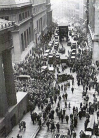
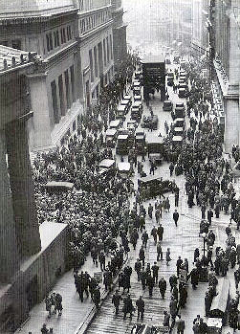
Panic hit the New York Stock Exchange on October 24, 1929, when a record 12.9 million shares changed hands in frenzied selling. Ticker machines ran hours behind actual trades, amplifying the terror as investors couldn't tell how much they'd lost. A group of leading bankers, including J.P. Morgan's Thomas Lamont, pooled resources to buy stocks and stabilize prices, briefly halting the decline. But it was a finger in a dam. The following Monday and Tuesday brought worse crashes, wiping out $30 billion in market value in two days. Margin buyers who had borrowed heavily were wiped out first, then the banks that had lent to them. The crash didn't cause the Great Depression by itself, but it destroyed consumer confidence and triggered a cascade of bank failures that contracted the money supply for three years.
October 24, 1929
97 years ago
Key Figures & Places

What Else Happened on October 24
Vespasian’s legions crushed the forces of Emperor Vitellius at the Second Battle of Bedriacum, ending the chaotic Year of the Four Emperors. This decisive victo…
Vitellius had held Rome for eight months. His soldiers were drunk and undisciplined. Antonius Primus commanded legions from the Danube—hardened troops who'd bee…
Afonso Henriques took Lisbon back from the Moors with help from 13,000 Crusaders who'd stopped on their way to the Holy Land. The siege lasted four months. The …
The cathedral had burned in 1194. Only the crypt and west facade survived. Rebuilding took 66 years. King Louis IX attended the dedication with his entire court…
Qutuz had stopped the Mongols at Ain Jalut two months earlier, the first time anyone had defeated them in open battle. He was returning to Cairo in triumph. Bai…
Baybars seizes the Egyptian throne after his forces crush the Mongols at Ain Jalut and he assassinates his predecessor, Sultan Qutuz. This victory halts the Mon…
Talk to History
Have a conversation with historical figures who witnessed this era. Ask questions, explore perspectives, and bring history to life.