

Channel Tunnel Links: UK and France Meet Under Sea
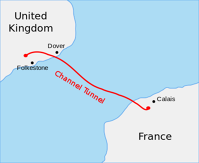
British and French engineers connected their tunnel boring machines 40 meters beneath the English Channel seabed on December 1, 1990, creating the first physical link between Britain and continental Europe since the last ice age. The Channel Tunnel, or 'Chunnel,' runs 31.4 miles from Folkestone, England, to Coquelles, France, with 23.5 miles under the sea. Construction employed 13,000 workers over seven years and cost 4.65 billion pounds, 80% over budget. Eleven workers died during construction. The project had been proposed since 1802, when a French engineer suggested a tunnel to Napoleon. The Eurostar high-speed rail service began carrying passengers in 1994, cutting London-to-Paris travel time to about two and a half hours. The tunnel carries roughly 10 million passengers per year and handles 25% of cross-Channel freight traffic.
December 1, 1990
36 years ago
Key Figures & Places




What Else Happened on December 1
Pope Leo III staggered into St. Peter's, his face still scarred from the Roman mob that tried to gouge out his eyes and cut out his tongue six months earlier. H…
Charlemagne sat in judgment of a pope. The charges against Leo III were serious—perjury, adultery, simony—brought by nephews of his predecessor who'd ambushed h…
Henry V rode through Paris's gates with 300 knights. The French king was alive but mad, locked in his own palace while his son-in-law claimed the throne. No sie…
Henry V paraded through the streets of Paris alongside his father-in-law, Charles VI, asserting his claim to the French throne following the Treaty of Troyes. T…
Queen Elizabeth I knighted her favorites Christopher Hatton and Thomas Heneage during a private ceremony at Windsor Castle. By elevating these men to the knight…
A 46-year-old spymaster with a network stretching from Venice to Constantinople got his knighthood — not for battlefield valor but for intercepting letters. Wal…
Talk to History
Have a conversation with historical figures who witnessed this era. Ask questions, explore perspectives, and bring history to life.