

Sixteenth Amendment Ratified: Income Tax Becomes Law
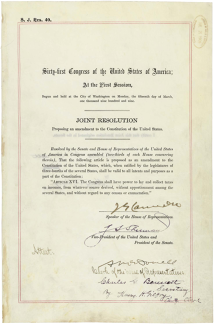
The Sixteenth Amendment, ratified on February 3, 1913, granted Congress the explicit power to levy income taxes without apportioning them among the states based on population. This overturned the Supreme Court's 1895 decision in Pollock v. Farmers' Loan & Trust Co., which had struck down a federal income tax as unconstitutional. The amendment was the culmination of decades of populist agitation against a tax system that relied heavily on tariffs and excise taxes, which fell disproportionately on consumers and farmers. The first income tax under the new amendment imposed a one percent rate on incomes over ,000, affecting roughly three percent of the population. Within five years, World War I pushed the top marginal rate to 77 percent. The amendment permanently transformed the federal government's fiscal capacity, enabling the massive expansion of domestic programs and military spending that defined the twentieth century.
February 3, 1913
113 years ago
Key Figures & Places

What Else Happened on February 3
The Normans conquered Southern Italy because younger sons had nothing to inherit back home. Drogo of Hauteville was one of twelve brothers who left Normandy as …
Ramon Berenguer III married Douce I of Provence in 1112. She was 18. He was 35 and already widowed. The marriage joined Barcelona's Mediterranean ports with Pro…
Papal mercenaries under Cardinal Robert of Geneva slaughtered over 2,000 residents of Cesena after the city resisted Church authority, an atrocity so severe it …
Sultan Mehmed II ascended the Ottoman throne, inheriting a fractured empire and a precarious geopolitical position. Two years later, he orchestrated the fall of…
Bartolomeu Dias sailed past the southern tip of Africa without realizing it. A storm pushed his ships so far off course that when he turned back north, he hit t…
Portugal crushed a combined fleet of Ottoman, Mamluk, and Indian forces off the coast of Diu, securing a decisive naval victory. This triumph ended Muslim domin…
Talk to History
Have a conversation with historical figures who witnessed this era. Ask questions, explore perspectives, and bring history to life.