

Historical Figure
John D. Rockefeller
1874–1937
American financier and philanthropist (1874–1960)
Talk to John D. Rockefeller
Have a conversation with this historical figure through AI
Biography
John Davison Rockefeller Jr. was an American financier and philanthropist. Rockefeller was the fifth child and only son of Standard Oil co-founder John D. Rockefeller. He was involved in the development of the vast office complex in Midtown Manhattan known as Rockefeller Center, making him one of the largest real estate holders in the city at that time. Towards the end of his life, he was famous for his philanthropy, donating over $500 million to a wide variety of different causes, including educational establishments. Among his projects was the reconstruction of Colonial Williamsburg in Virginia. He was widely blamed for having orchestrated the Ludlow Massacre and other offenses during the Colorado Coalfield War. Rockefeller was the father of six children: Abby, John III, Nelson, Laurance, Winthrop, and David.
In Their Own Words (5)
I believe the power to make money is a gift of God … to be developed and used to the best of our ability for the good of mankind. Having been endowed with the gift I possess, I believe it is my duty to make money and still more money and to use the money I make for the good of my fellow man according to the dictates of my conscience.
Interview with William Hoster, quoted in God's Gold (1932) by John T. Flynn , 1932
I would rather hire a man with enthusiasm, than a man who knows everything.
As quoted in Classic Wisdom for the Professional Life (2010) by Bryan Curtis, p. 75 , 2010
Next to doing the right thing, the most important thing is to let people know you are doing the right thing.
As quoted in The Forbes Book of Business Quotations (2007) edited by Ted Goodman, p. 175 , 2007
The most important thing for a young man is to establish a credit — a reputation, character.
The Men Who Are Making America (1918) by Bertie Charles Forbes , 1918
I believe it is a religious duty to get all the money you can, fairly and honestly; to keep all you can, and to give away all you can.
TIME Magazine (21. May 1928) , 1928
Timeline
The story of John D. Rockefeller, told in moments.
Incorporates Standard Oil of Ohio. He's 30. Within a decade, he'll control 90% of American oil refining through a web of trusts, secret railroad rebates, and relentless acquisition. He doesn't drill for oil. He refines it, ships it, and sets the price.
The Supreme Court breaks Standard Oil into 34 companies under the Sherman Antitrust Act. The irony: the breakup makes him richer. His shares in the successor companies are worth more separately than together. ExxonMobil, Chevron, and BP all trace back to Standard Oil.
Creates the Rockefeller Foundation with $100 million. Roughly $3 billion in today's money. He'd already funded the University of Chicago and medical research. The Foundation will eradicate hookworm in the American South and fund the Green Revolution.
His net worth crosses $1 billion. He's the first person to reach that number. Adjusted for the economy's size, he may be the richest American who ever lived. He gives dimes to strangers on the street.
Dies in Ormond Beach, Florida, at 97. He'd built his first refinery in Cleveland at 23. His daily routine in old age: golf, Bible study, and handing out dimes. He left behind a fortune that still funds museums, universities, and medical research.
Artifacts (1)
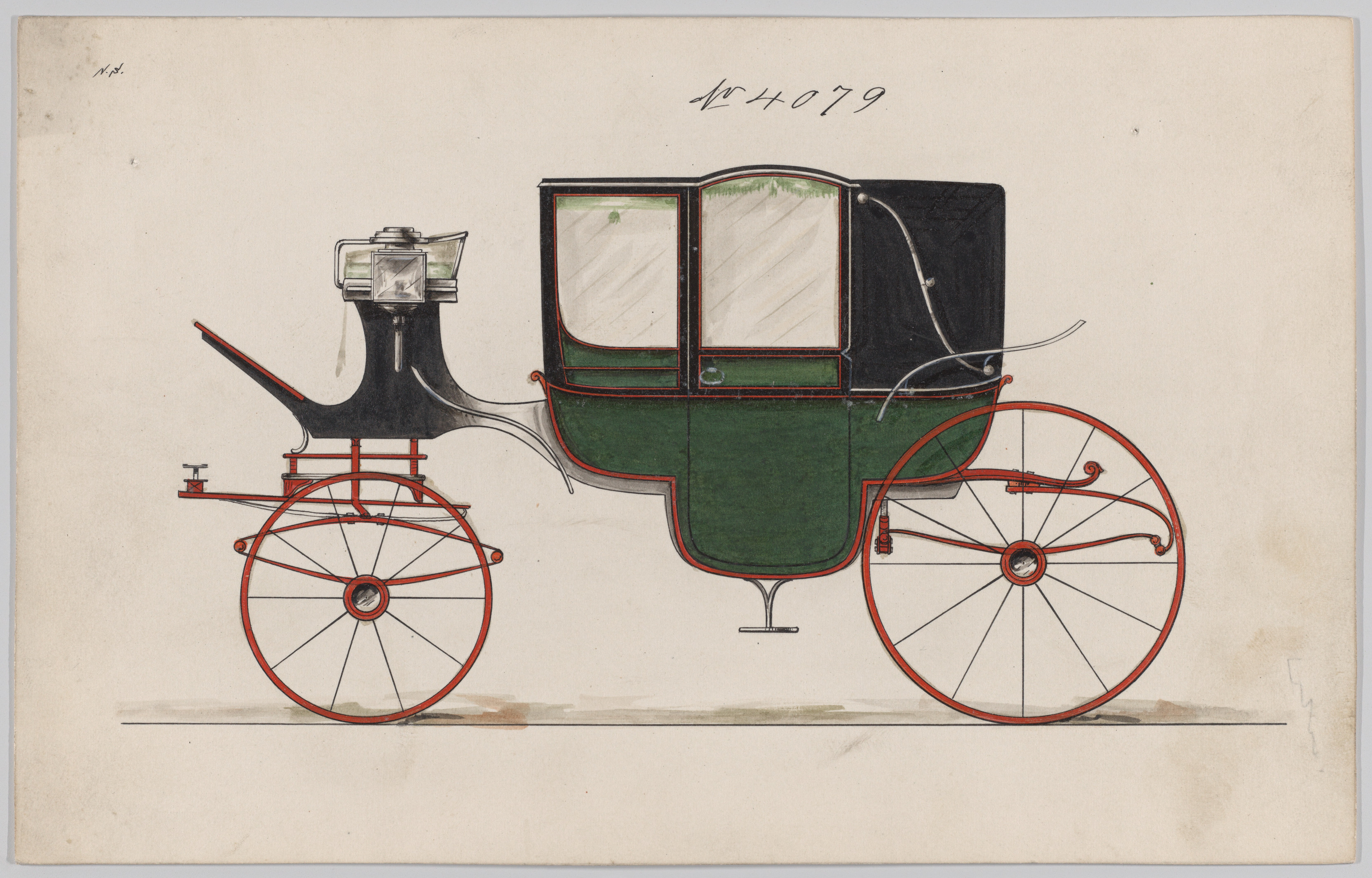
Design for Landau, No. 4079
Brewster & Co.|John D. Rockefeller|Herman Stahmer
More from the Victorian Era


Explore what happened on the days that shaped John D. Rockefeller's life. Today In History connects historical figures with the events, births, and deaths that defined their era. Browse all historical figures or explore today's events.