

Thutmose III Dies: Egypt's Greatest Conqueror
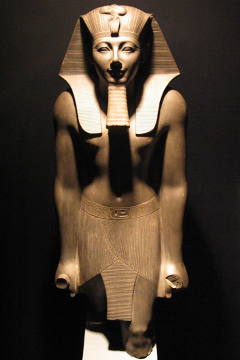
Thutmose III died on March 11, 1425 BC, after a reign of 54 years that transformed Egypt from a regional power into the ancient world's dominant empire. His military genius was unmatched in Egyptian history: seventeen campaigns across the Levant, Syria, and Nubia conquered over 350 cities and extended Egyptian control from the Euphrates River to the Fourth Cataract of the Nile. His most celebrated victory came at the Battle of Megiddo in 1457 BC, where he led his army through a narrow mountain pass that his generals considered suicidal, catching the Canaanite coalition by surprise. The battle is the first in history for which a detailed tactical account survives, recorded on the walls of the Temple of Karnak. Thutmose also expanded the temple complex at Karnak extensively, commissioned obelisks that now stand in Istanbul, London, and New York, and established Egypt's first botanical garden based on plants he collected during his campaigns. Modern historians often call him the 'Napoleon of Egypt.'
March 11, 1425 BC
Key Figures & Places
What Else Happened on March 11
The Praetorian Guard didn't just kill the eighteen-year-old emperor—they erased him. After stabbing Elagabalus and his mother Julia Soaemias in a palace latrine…
She'd been ruling for a child emperor — her three-year-old son Michael III — when Theodora risked everything to reverse a policy that had torn the Byzantine Emp…
The Pope refused to create the archbishopric for seven years because he didn't trust King John of Bohemia's loyalty. Charles IV, John's son, had to wait until h…
John Hawkwood’s tactical brilliance dismantled the Veronese army at the Battle of Castagnaro, securing a decisive victory for Padua. By utilizing flooded fields…
English mercenary captain Sir John Hawkwood deployed a feigned retreat to draw Verona's forces into a devastating ambush at Castagnaro, delivering Padua a decis…
The Jesuits armed thousands of Indigenous converts with European muskets and cavalry tactics, then watched them outmaneuver Portuguese slave raiders at their ow…
Talk to History
Have a conversation with historical figures who witnessed this era. Ask questions, explore perspectives, and bring history to life.