

Stamp Act Repealed: Victory for American Colonists
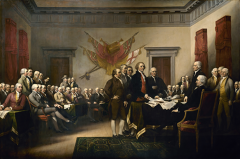
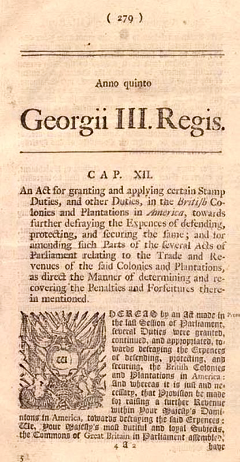
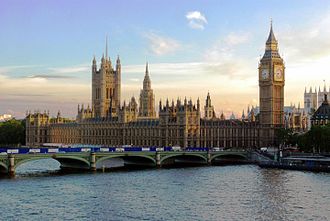
The British Parliament repealed the Stamp Act on March 18, 1766, just one year after imposing the first direct tax on the American colonies. The act had required colonists to purchase embossed revenue stamps for legal documents, newspapers, playing cards, and dozens of other paper goods. The reaction was explosive: mobs attacked stamp distributors, merchants organized boycotts of British goods, and delegates from nine colonies convened the Stamp Act Congress in New York. The boycotts hurt British merchants, who lobbied Parliament furiously for repeal. Benjamin Franklin testified before the House of Commons, warning that enforcement would require military occupation. Parliament repealed the tax but simultaneously passed the Declaratory Act, asserting its right to legislate for the colonies 'in all cases whatsoever.' The colonists celebrated the repeal but ignored the Declaratory Act, believing they had established the principle that Parliament could not tax them without representation. They were wrong: Parliament would try again with the Townshend Acts the following year.
March 18, 1766
260 years ago
Key Figures & Places



What Else Happened on March 18
The Roman Senate bypassed the late Emperor Tiberius’s will to install his grand-nephew, Caligula, as the new ruler. This swift transition ended the uncertainty …

The Roman Senate proclaimed Gaius Julius Caesar Germanicus, known as Caligula, emperor on March 18, 37 AD, immediately after the death of Tiberius. Caligula was…
His mother tried to bribe the soldiers with gold. It didn't work. Emperor Alexander Severus and Julia Mamaea — who'd ruled Rome through her 26-year-old son for …
Caliph Abu Bakr crushed the final major resistance of the Ridda Wars, consolidating the Arabian Peninsula under a single central authority. This victory transfo…
A massive earthquake shattered the Levant and the Arabian Peninsula, collapsing structures across a vast region and claiming up to 20,000 lives. This disaster d…
Frederick II crowned himself King of Jerusalem inside the Church of the Holy Sepulchre, securing the city through diplomacy rather than the bloodshed typical of…
Talk to History
Have a conversation with historical figures who witnessed this era. Ask questions, explore perspectives, and bring history to life.