

Jutland: History's Largest Naval Battle Proves Indecisive
The Battle of Jutland on May 31-June 1, 1916, was the largest naval battle of World War I and the only full-scale engagement between the British Grand Fleet and the German High Seas Fleet. Admiral John Jellicoe commanded 151 British ships against Admiral Reinhard Scheer's 99 German vessels. Britain lost 14 ships and 6,094 sailors; Germany lost 11 ships and 2,551 men. Germany claimed tactical victory based on losses, but Britain maintained strategic control of the North Sea. The Grand Fleet remained intact and continued the blockade that was slowly strangling the German economy. Scheer concluded that the High Seas Fleet could not win a surface engagement and recommended unrestricted submarine warfare, the policy that eventually drew the United States into the war.
May 31, 1916
110 years ago
Key Figures & Places
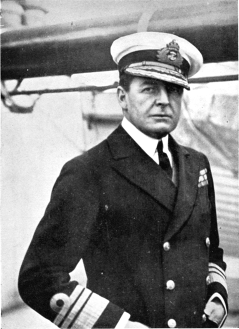
David Beatty, 1st Earl Beatty
Wikipedia
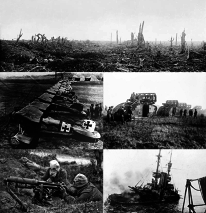
World War I
Wikipedia
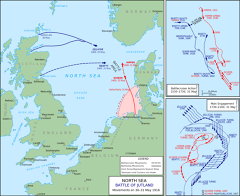
Battle of Jutland
Wikipedia
British Grand Fleet
Wikipedia
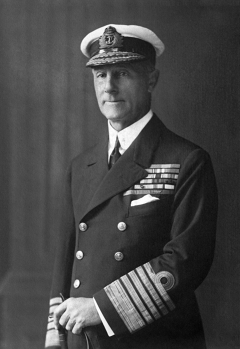
John Jellicoe, 1st Earl Jellicoe
Wikipedia
Sir David Beatty
Wikipedia
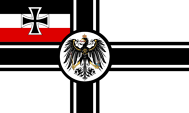
Kaiserliche Marine
Wikipedia
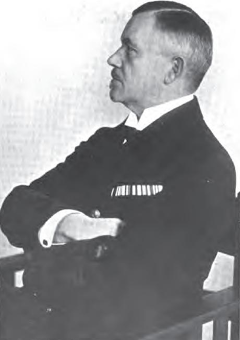
Reinhard Scheer
Wikipedia
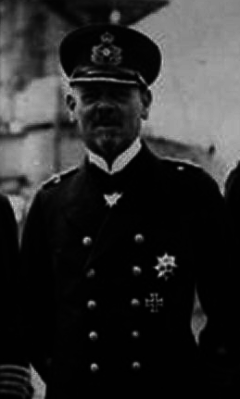
Franz von Hipper
Wikipedia
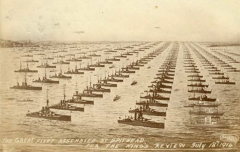
Grand Fleet
Wikipedia
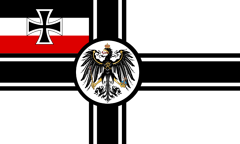
Imperial German Navy
Wikipedia
What Else Happened on May 31

Ramesses II ascended the Egyptian throne around 1279 BC at roughly 25 years old and ruled for 66 years, making his the second-longest reign in Egyptian history.…
An enraged Roman mob intercepted Emperor Petronius Maximus as he attempted to flee the city, stoning him to death in the streets. His brutal execution left the …
The ground shook for eighteen months straight afterward. That's what survivors remembered most about the 526 Antioch quake—not just the initial terror when buil…
The Mongols didn't just take Zhongdu—they waited. For a year. Genghis Khan's forces surrounded the Jin capital while its million inhabitants starved inside wall…
The Rus princes couldn't agree on a battle plan, so they didn't share one. At the Kalka River in 1223, Subutai's Mongol scouts pretended to retreat for nine day…
Mongol forces retreated from Java after Raden Wijaya tricked them into attacking his rivals, ending Kublai Khan’s attempt to subjugate the island. This tactical…
Talk to History
Have a conversation with historical figures who witnessed this era. Ask questions, explore perspectives, and bring history to life.