

Hitler Escapes Assassination: Elser's Plot in Munich
Georg Elser, a carpenter, spent over 30 nights hollowing out a pillar in Munich's Burgerbraukeller, where Hitler delivered an annual speech commemorating the 1923 Beer Hall Putsch. Elser built a time bomb with two clock mechanisms for redundancy and concealed it inside the pillar. On November 8, 1939, the bomb detonated at 9:20 p.m., collapsing the ceiling and killing eight people. Hitler had left 13 minutes earlier. He had cut his speech short because fog prevented him from flying back to Berlin, forcing him to take an earlier train. Elser was caught at the Swiss border that night carrying bomb components. He was held in Sachsenhausen and Dachau concentration camps for five years, interrogated but never publicly tried. He was executed on April 9, 1945, just three weeks before Germany surrendered.
November 8, 1939
87 years ago
Key Figures & Places
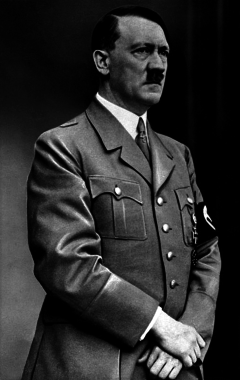
Adolf Hitler
Wikipedia
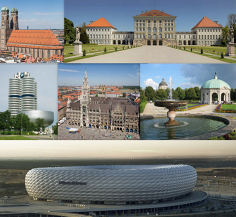
Munich
Wikipedia
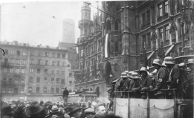
Beer Hall Putsch
Wikipedia
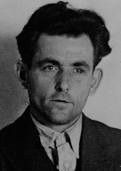
Georg Elser
Wikipedia
assassination attempt
Wikipedia

Munich
Wikipedia

Adolf Hitler
Wikipedia

Georg Elser
Wikipedia

Beer Hall Putsch
Wikipedia

Nazism
Wikipedia

The Eternal Jew (art exhibition)
Wikipedia

Germany
Wikipedia

Bürgerbräukeller
Wikipedia

Nazi Party
Wikipedia

Weimar Republic
Wikipedia

Wilhelm Röntgen
Wikipedia

X-ray
Wikipedia

tear down
Wikipedia

Cold War
Wikipedia

Mike Pompeo
Wikipedia

Bavaria
Wikipedia

Joseph Goebbels
Wikipedia
Bibliothek des Deutschen Museums
Wikipedia
Wanderausstellung
Wikipedia

Geschichte des Antisemitismus bis 1945
Wikipedia

Erich Ludendorff
Wikipedia

Hermann Göring
Wikipedia

Geschichte Münchens
Wikipedia

Führer
Wikipedia

Nazi Germany
Wikipedia

Caporal
Wikipedia
What Else Happened on November 8
Sayf al-Dawla had terrorized Byzantine frontiers for decades. Brilliant. Relentless. Nearly untouchable. Then Leo Phokas the Younger lured him into the Andrasso…
He wasn't sick. He wasn't overthrown. Trần Thánh Tông simply handed power to his son Trần Khâm and walked away from the throne by choice. No coup, no crisis — j…
Venetian authorities forced glassmakers to relocate their furnaces to the island of Murano to contain the constant threat of fire in the city’s wooden heart. Th…

Hernan Cortes and roughly 400 Spanish soldiers marched into Tenochtitlan on November 8, 1519, entering one of the world's largest cities, home to at least 200,0…
Christian II ordered the execution of nearly one hundred Swedish noblemen immediately after his coronation, shattering his own promises of a general amnesty. Th…
Three days of executions. King Christian II of Denmark had promised amnesty — then ordered the killings anyway. Around 100 Swedish nobles, bishops, and burghers…
Talk to History
Have a conversation with historical figures who witnessed this era. Ask questions, explore perspectives, and bring history to life.