

Historical Figure
Abraham Lincoln
1809–1865
President of the United States from 1861 to 1865
Talk to Abraham Lincoln
Have a conversation with this historical figure through AI
Biography
Abraham Lincoln was the 16th president of the United States, serving from 1861 until his assassination in 1865. He led the United States through the American Civil War, defeating the Confederate States and playing a major role in the abolition of slavery.
In Their Own Words (5)
Abraham Lincoln is my name And with my pen I wrote the same I wrote in both hast and speed and left it here for fools to read
Manuscript poem, as a teenager (ca. 1824–1826), in "Lincoln as Poet" at Library of Congress : Presidents as Poets, as published in The Collected Works of Abraham Lincoln (1953) edited by Roy. P. Basler, Vol. 1 , 1953
Determine that the thing can and shall be done, and then we shall find the way.
Speech in the House of Representatives (20 June 1848) , 1848
The way for a young man to rise, is to improve himself every way he can, never suspecting that any body wishes to hinder him.
Letter to William H Herndon (10 July 1848) , 1848
These capitalists generally act harmoniously and in concert to fleece the people, and now that they have got into a quarrel with themselves, we are called upon to appropriate the people's money to settle the quarrel.
Speech to Illinois legislature (January 1837); This is "Lincoln's First Reported Speech", found in the Sangamo Journal (28 January 1837) according to McClure's Magazine (March 1896); also in Lincoln's Complete Works (1905) ed. by Nicolay and Hay, Vol. 1, p. 24 , 1905
In law it is a good policy never to plead what you need not, lest you oblige yourself to prove what you cannot.
Letter to former Illinois Attorney General Usher F. Linder (20 February 1848) , 1848
Timeline
The story of Abraham Lincoln, told in moments.
Sinks into a depression so severe his friends hide his razors. He calls it "the hypo." He writes to his law partner: "I am now the most miserable man living." He is 31. He will battle these episodes the rest of his life, sometimes unable to work for weeks.
Receives a patent for a device to lift boats over shoals using inflatable bellows. He whittled the model himself. No one ever built the thing, but he remains the only U.S. president to hold a patent.
Delivers his House Divided speech in Springfield, accepting the Republican nomination for Senate. "A house divided against itself cannot stand. I believe this government cannot endure, permanently half slave and half free." He loses the Senate race to Stephen Douglas. He wins something bigger: a national audience.
Elected president with just 40% of the popular vote in a four-way race. He isn't even on the ballot in ten Southern states. Within weeks of his election, South Carolina votes to secede.
Signs the Emancipation Proclamation. It frees enslaved people only in Confederate states, where Lincoln has no enforcement power. It frees no one in border states loyal to the Union. But it transforms the war. Union soldiers are now fighting to end slavery, and 180,000 Black men will enlist before the war ends.
Delivers the Gettysburg Address. Two hundred and seventy-two words. The main speaker that day, Edward Everett, talked for two hours. Lincoln spoke for two minutes. Everett later wrote to him: "I should be glad if I could flatter myself that I came as near to the central idea of the occasion, in two hours, as you did in two minutes."
Shot by John Wilkes Booth while watching Our American Cousin at Ford's Theatre. The bullet entered behind his left ear. He never regained consciousness. He died the next morning at 7:22 a.m. in a boarding house across the street, in a bed too short for his frame. His Secretary of War, Edwin Stanton, reportedly said: "Now he belongs to the ages."
Pushes the 13th Amendment through the House of Representatives. The Senate passed it months ago. The House is the fight. He twists arms, trades favors, makes promises. The amendment abolishing slavery passes by two votes. He calls it "the great event of the nineteenth century."
The Lincoln Memorial is dedicated in Washington, D.C. Thirty-six columns, one for each state in the Union at the time of his death. Robert Todd Lincoln, his only surviving son, attends the ceremony. He is 78 years old.
Artifacts (15)
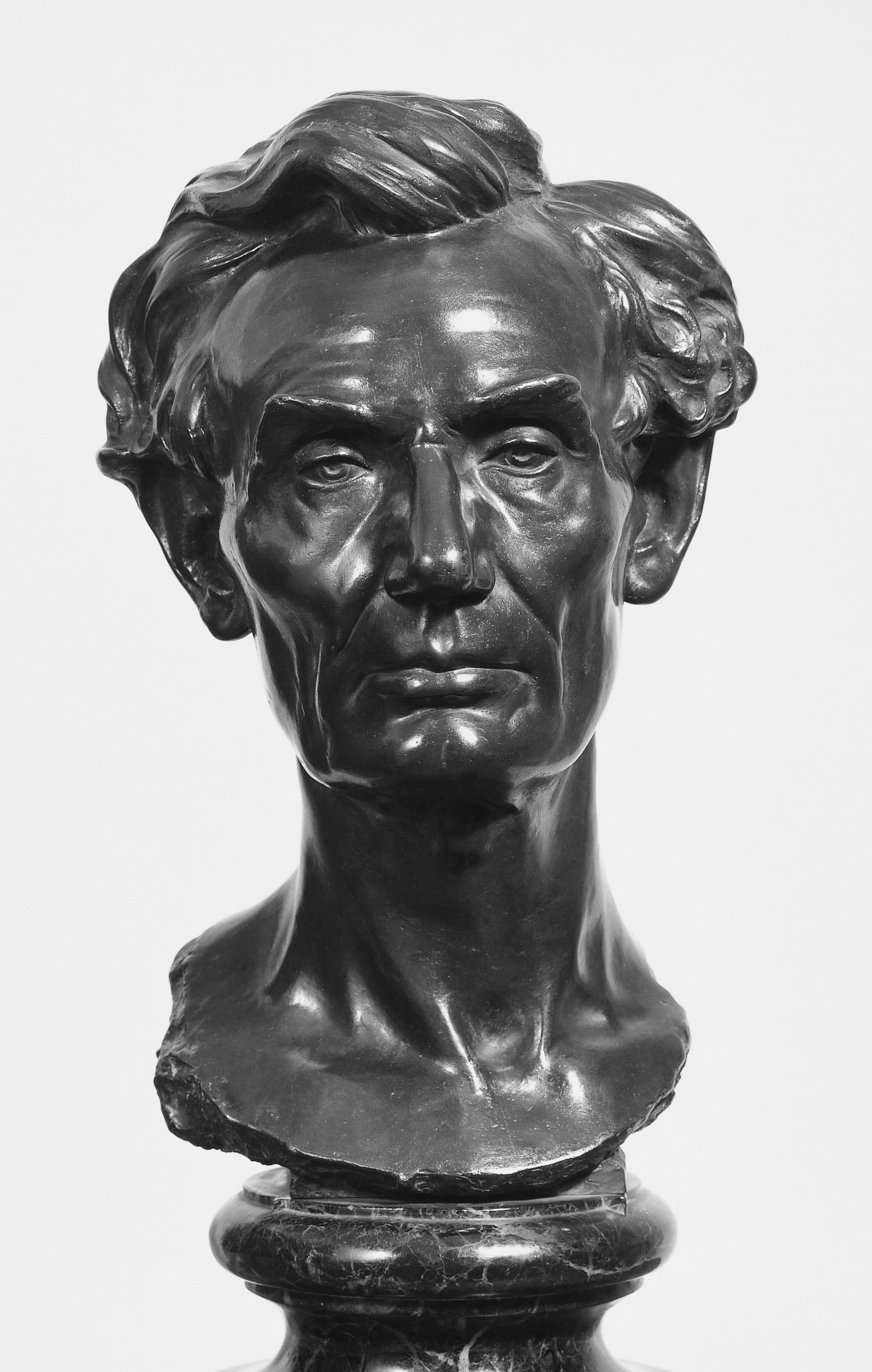
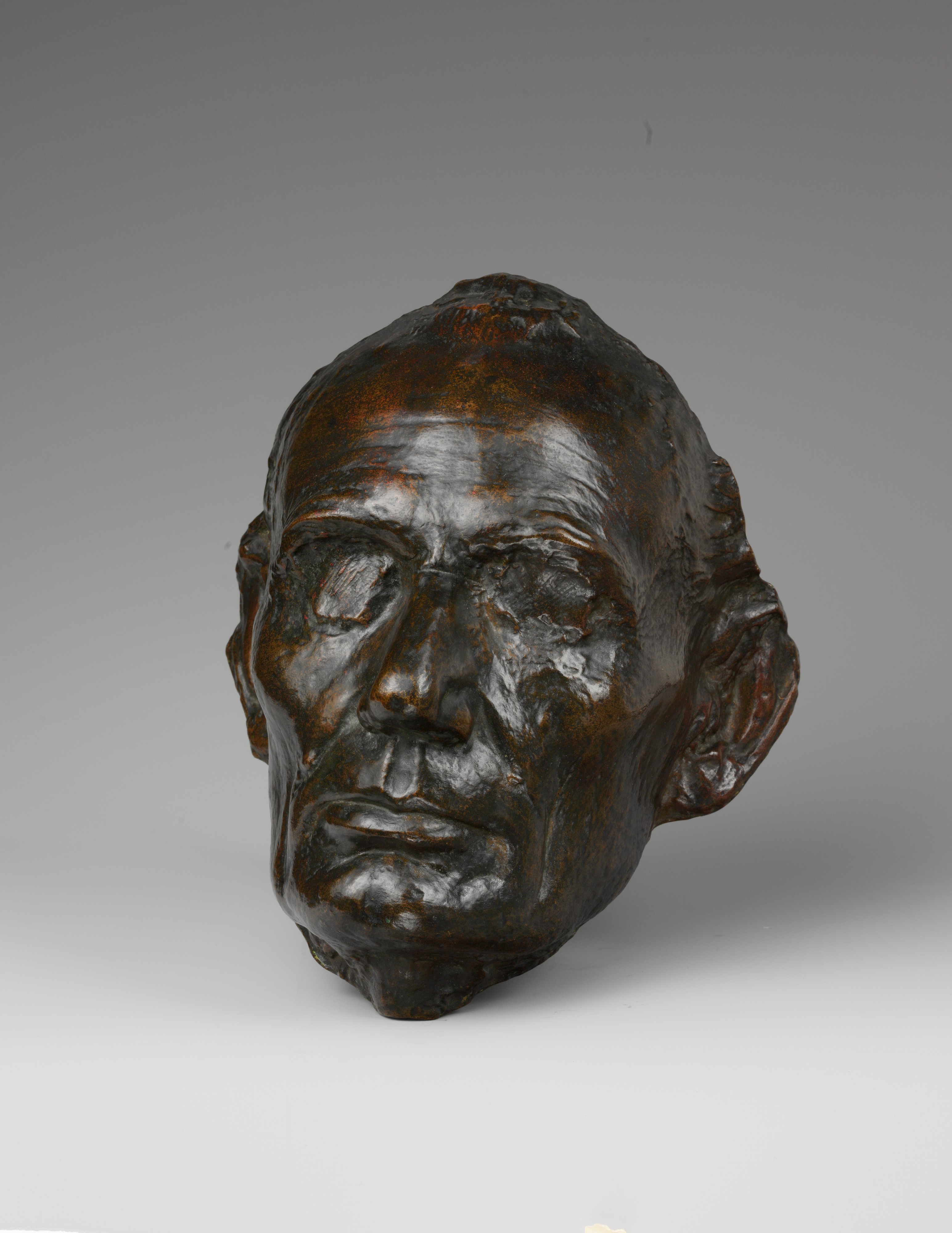
Life Mask of Abraham Lincoln
Leonard Wells Volk|Augustus Saint-Gaudens

Right Hand of Abraham Lincoln
Leonard Wells Volk|Augustus Saint-Gaudens
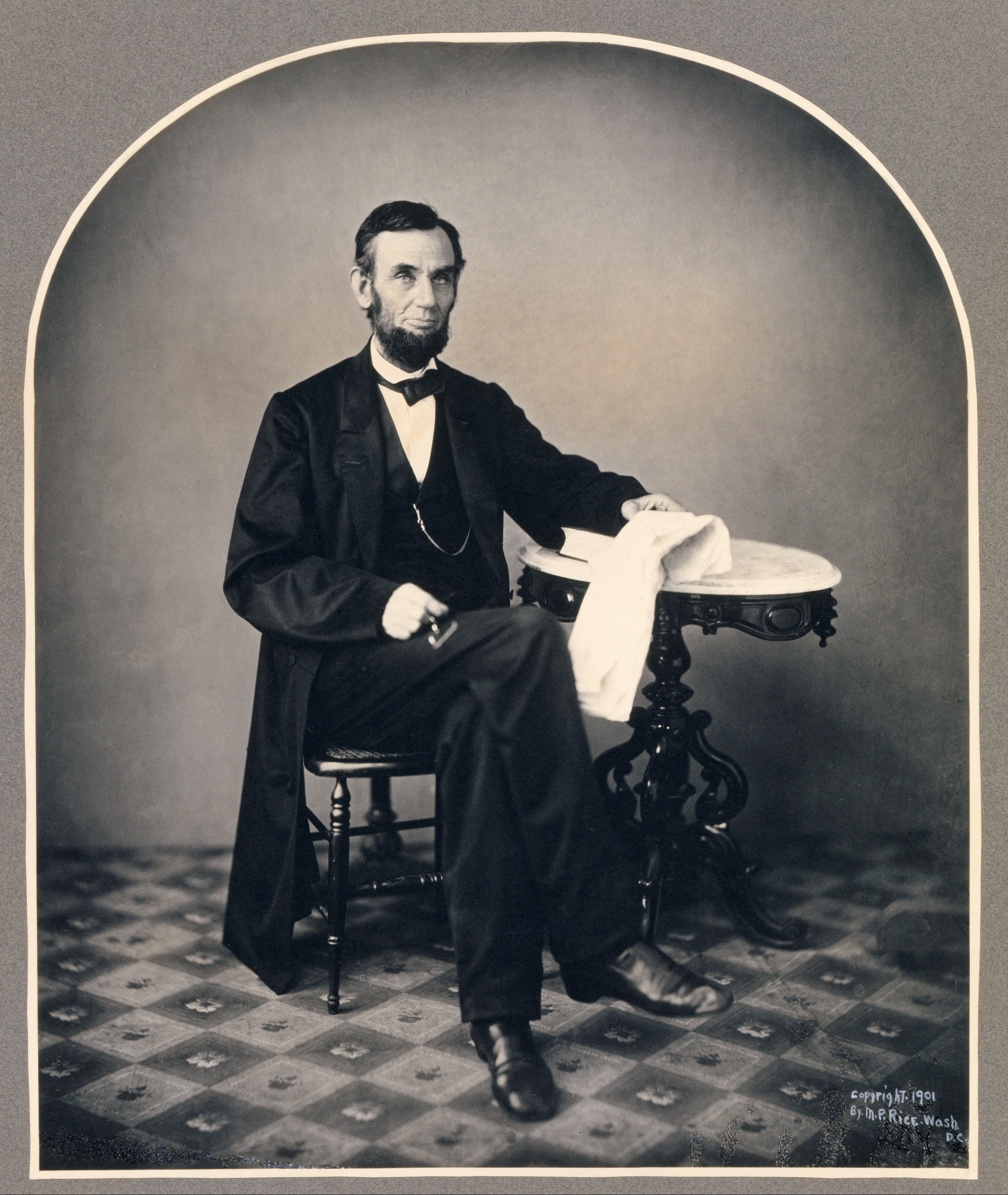
Abraham Lincoln
Alexander Gardner|Rice|Abraham Lincoln
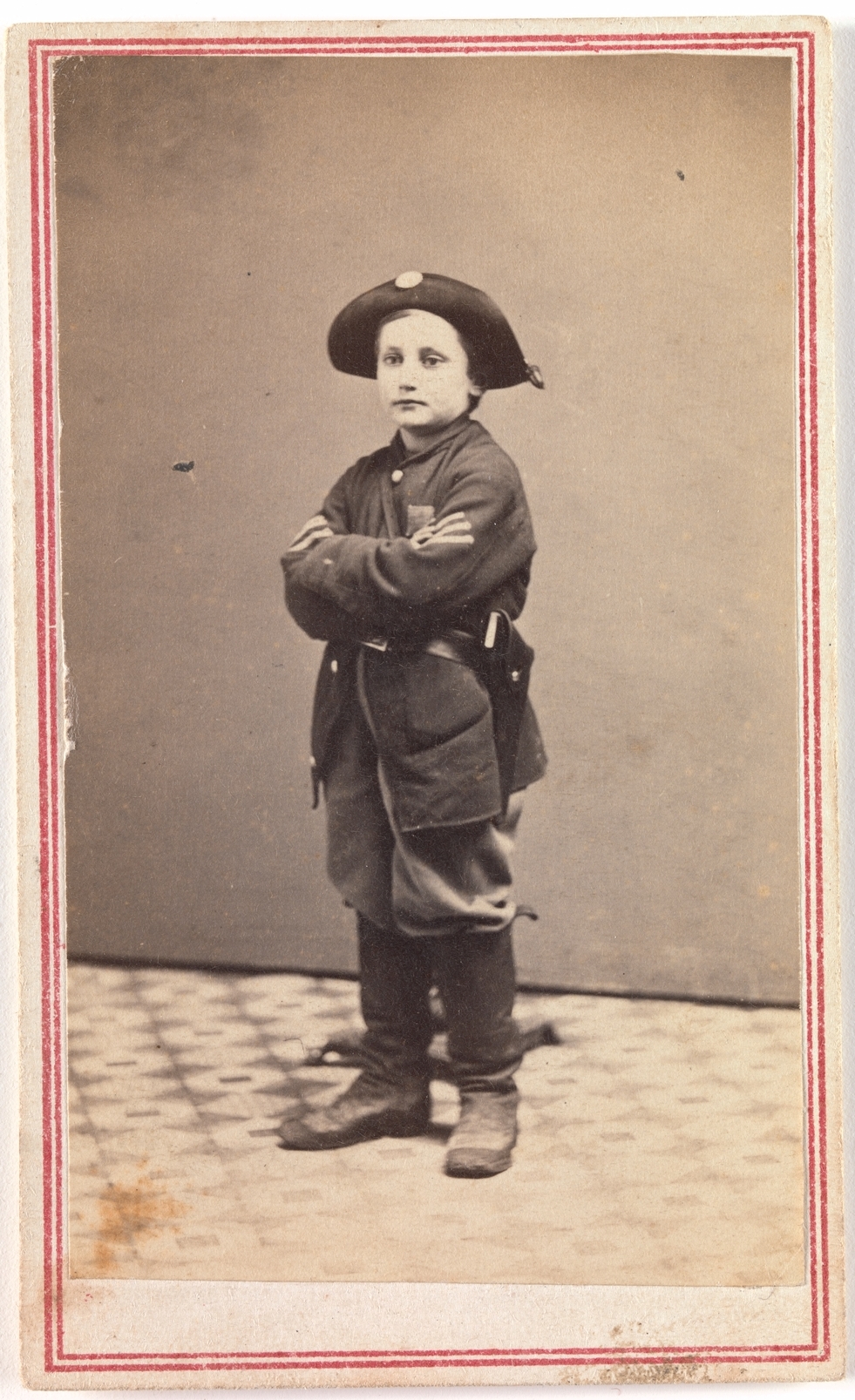
Sergeant John Lincoln Clem, The Drummer Boy of Chickamauga
Morse & Peaslee, Gallery of the Cumberland
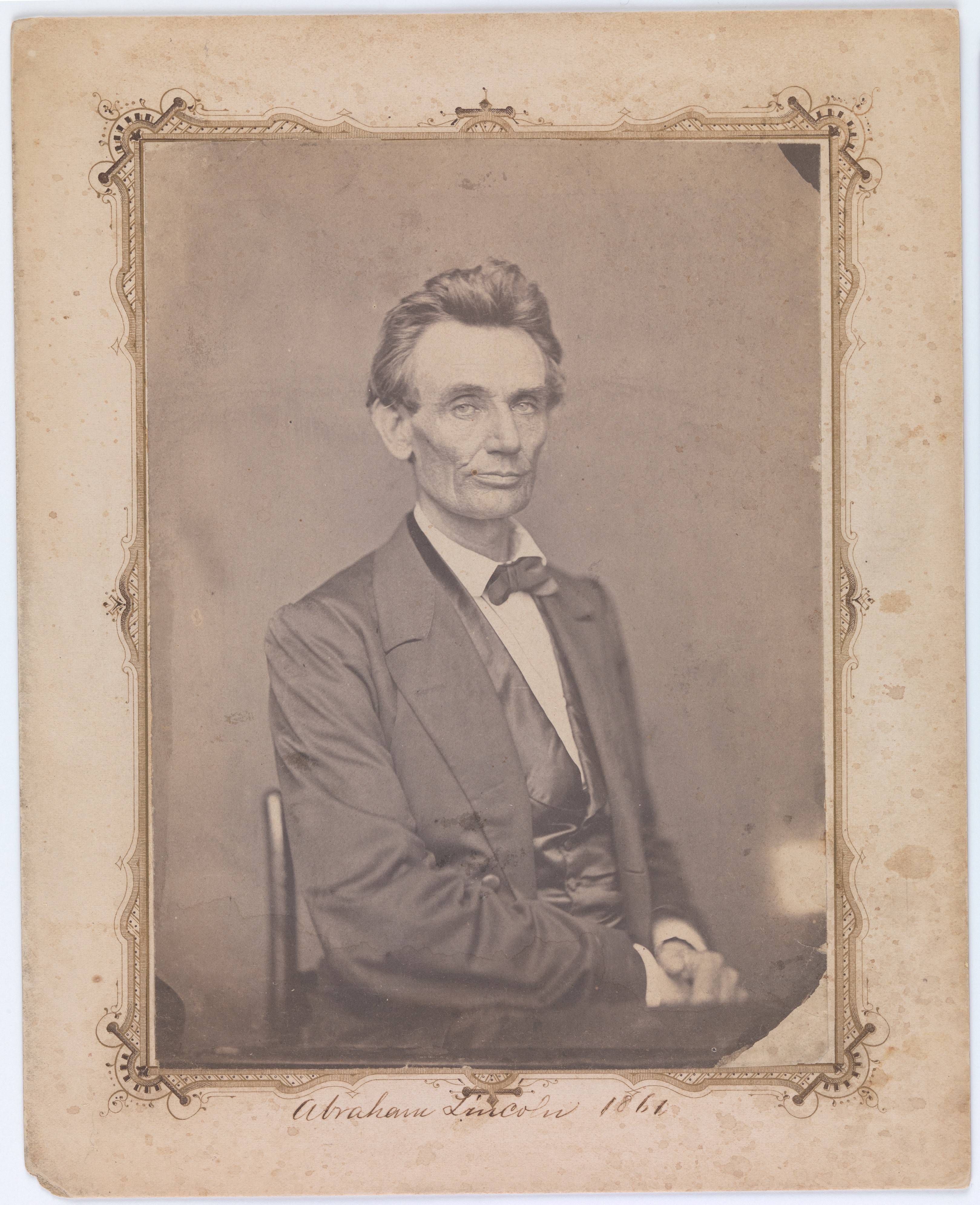
Abraham Lincoln
William Marsh|Abraham Lincoln

Lincoln Inauguration
Alexander Gardner
![[Thaddeus Stevens Lying in State in the Rotunda of the Capitol at Washington]](https://images.metmuseum.org/CRDImages/ph/original/DP279260.jpg)
[Thaddeus Stevens Lying in State in the Rotunda of the Capitol at Washington]
Alexander Gardner
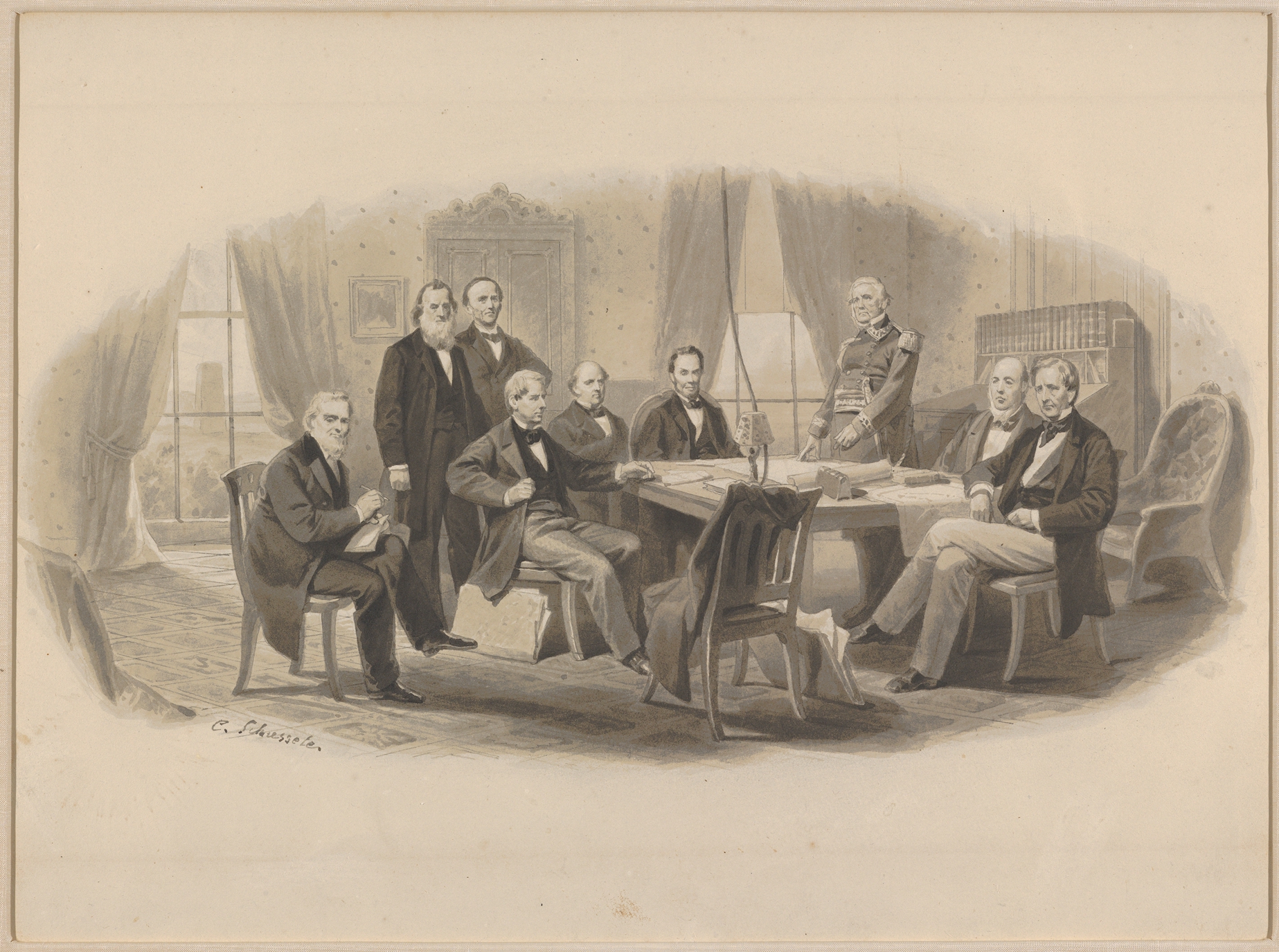
President Lincoln and His Cabinet
Christian Schussele|Simon Cameron|William H. Seward|Gideon Welles|Samuel Portland Chase|General Winfield Scott|Abraham Lincoln|Montgomery Blair|Edward Bates|Caleb Blood Smith
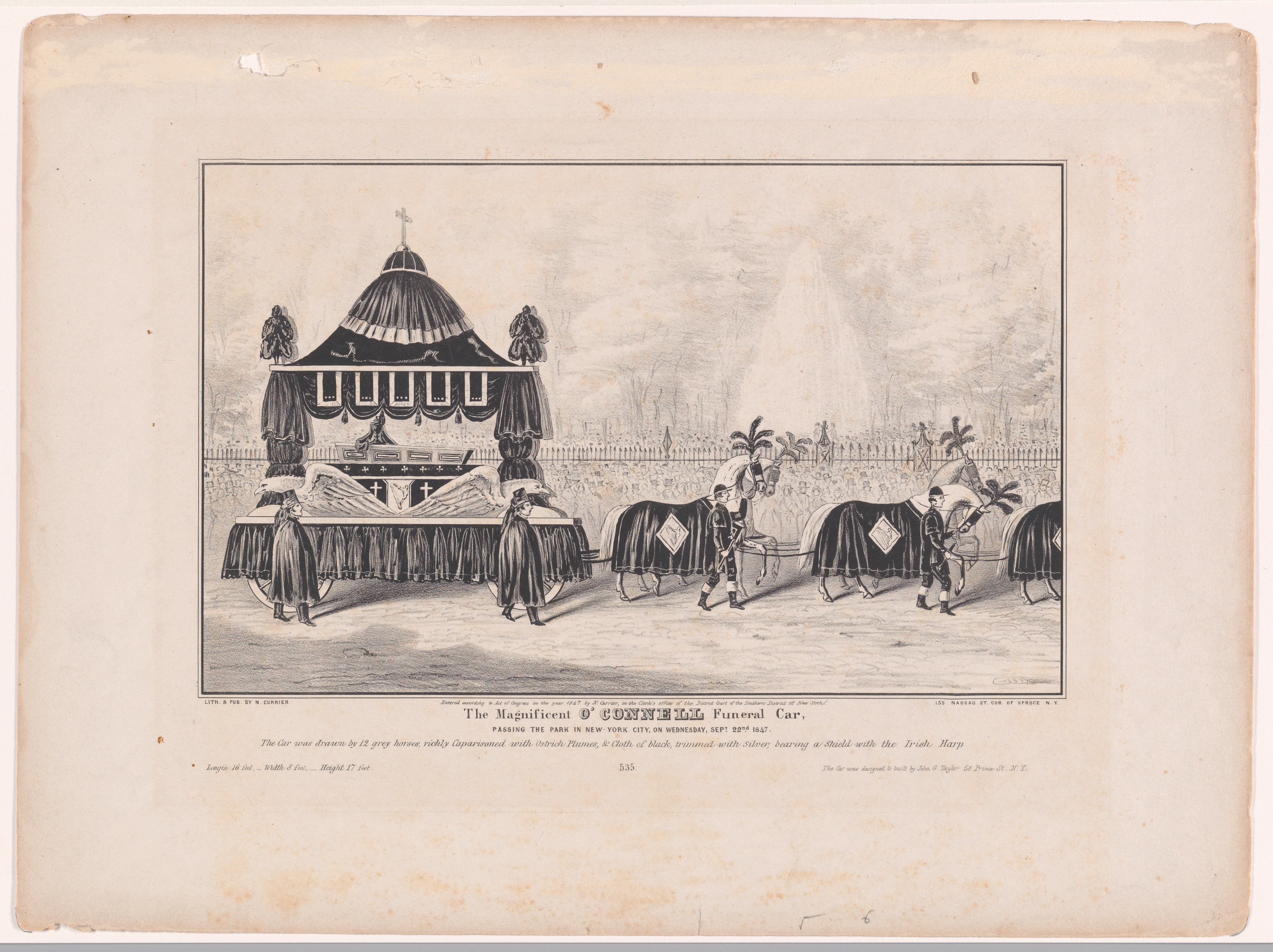
The Magnificent O'Connell Funeral Car, Passing the Park in New York City, on Wednesday, Sept. 22nd, 1847
Nathaniel Currier|Abraham Lincoln
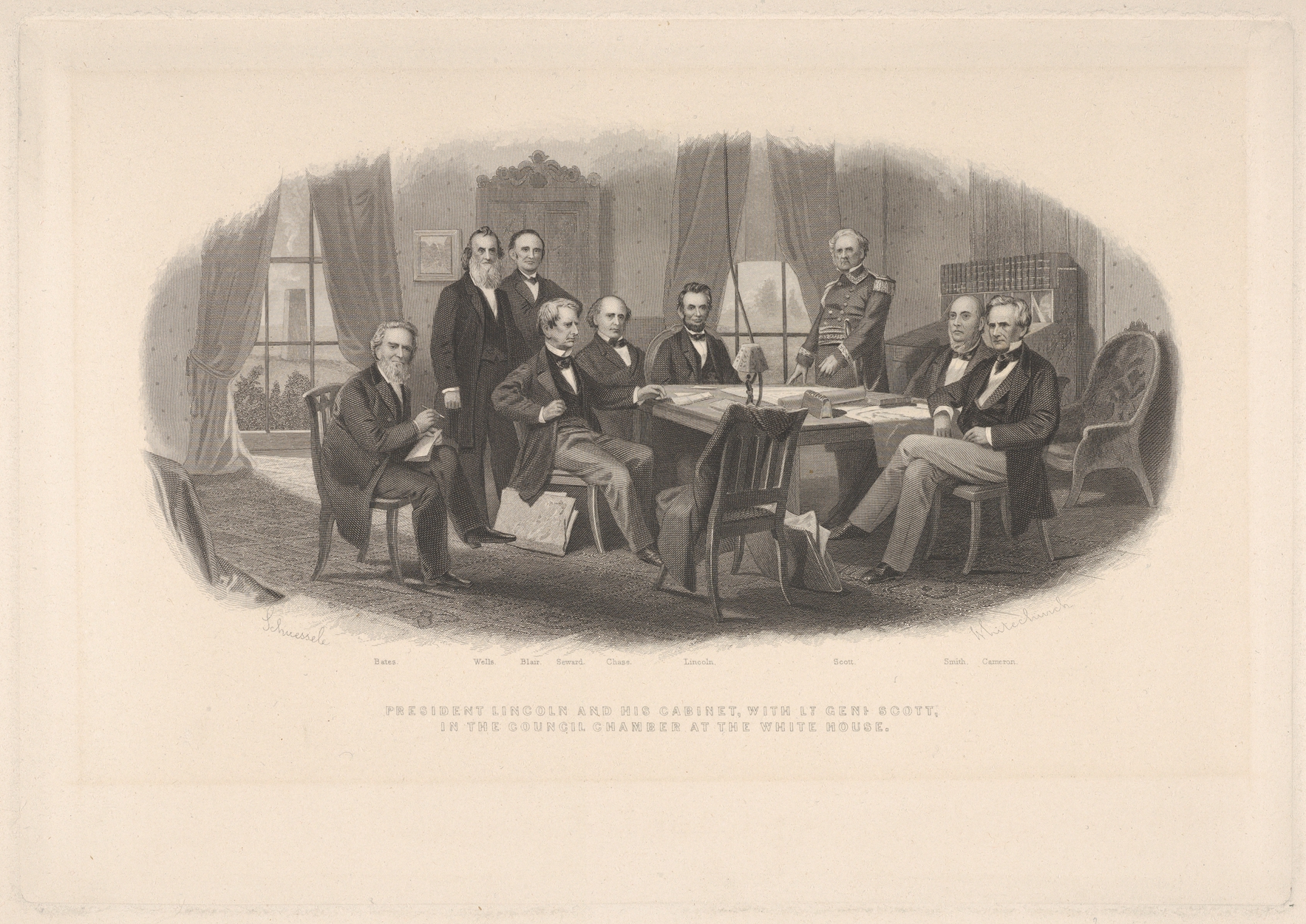
President Lincoln and His Cabinet, with Lt. General Scott, in the Council Chamber at the White House
Robert Whitechurch|Christian Schussele|Simon Cameron|General Winfield Scott|Caleb Blood Smith|Abraham Lincoln|Montgomery Blair|Samuel Portland Chase|Edward Bates|Gideon Welles
More from the Industrial Revolution


Explore what happened on the days that shaped Abraham Lincoln's life. Today In History connects historical figures with the events, births, and deaths that defined their era. Browse all historical figures or explore today's events.