

Historical Figure
Ludwig van Beethoven
d. 1827
German composer (1770–1827)
Talk to Ludwig van Beethoven
Have a conversation with this historical figure through AI
Biography
Ludwig van Beethoven was a German composer and pianist. He is one of the greatest composers in the history of classical music, and his symphonies redefined the medium for later musicians.
In Their Own Words (5)
Music is the one incorporeal entrance into the higher world of knowledge which comprehends mankind but which mankind cannot comprehend.
As reported by Elizabeth Brentano (Bettina) in a letter to Goethe, 27 May 1810. , 1810
I want to seize fate by the throat.
Letter to F.G. Wegeler, 16 November, 1801. , 1801
Do not merely practice your art, but force your way into its secrets; it deserves that, for only art and science can exalt man to divinity.
Letter to Emilie, July 17, 1812. , 1812
The world is a king, and like a king, desires flattery in return for favor; but true art is selfish and perverse — it will not submit to the mold of flattery.
Conversations (March 1820) , 1820
It is a recognised fact that the greatest composers were likewise the greatest virtuosos; but did they play like the pianists of the present day, who run up and down the keyboard with passages studied beforehand? Pooh! pooh! pooh! Don't tell me! A real virtuoso, when extemporising, plays pieces which hold together and possess a form. Were the ideas in them fixed instantly on paper, they would be taken for pieces written at leisure. That is what I call playing the piano; everything else is a bad joke.
24th November, 1814 , 1814
Timeline
The story of Ludwig van Beethoven, told in moments.
Baptized in Bonn. Exact birth date unknown. His father Johann is a court musician and alcoholic who beats him into practicing the piano, sometimes dragging him out of bed in the middle of the night. Johann tries to market him as a child prodigy like Mozart, lying about his age to make him seem younger. It doesn't work.
Moves to Vienna at 21 to study with Haydn. Quickly builds a reputation as the fiercest pianist anyone has heard. His playing is wild, aggressive, nothing like Mozart's elegance. Aristocrats compete to sponsor him. He has terrible manners and doesn't care. He tells one patron: "There are many princes. There is only one Beethoven."
Writes the Heiligenstadt Testament, a letter to his brothers describing his despair over his worsening deafness. "I was on the point of putting an end to my life. Only art held me back." He never sends it. It's found in his desk after his death. He's 31 and already having trouble hearing conversations.
Premieres the Fifth and Sixth Symphonies on the same evening in Vienna. The concert is four hours long. The theater is freezing. The orchestra barely rehearsed. The audience is exhausted. It doesn't matter. The opening four notes of the Fifth become the most recognized phrase in Western music. Da-da-da-DUM.
Conducts the premiere of the Ninth Symphony in Vienna. He's almost completely deaf. At the end, the audience erupts but he can't hear them. The contralto soloist turns him around to face the crowd so he can see the applause. Five standing ovations. The police ask the audience to stop because only the emperor gets more than three.
Dies in Vienna at 56. His liver is destroyed, possibly by lead poisoning from his wine. An estimated 20,000 people attend his funeral procession. Schubert is a torchbearer. On his deathbed, during a thunderstorm, he reportedly raises his fist to the sky. His last words may have been about a case of wine that arrived too late.
Artifacts (14)
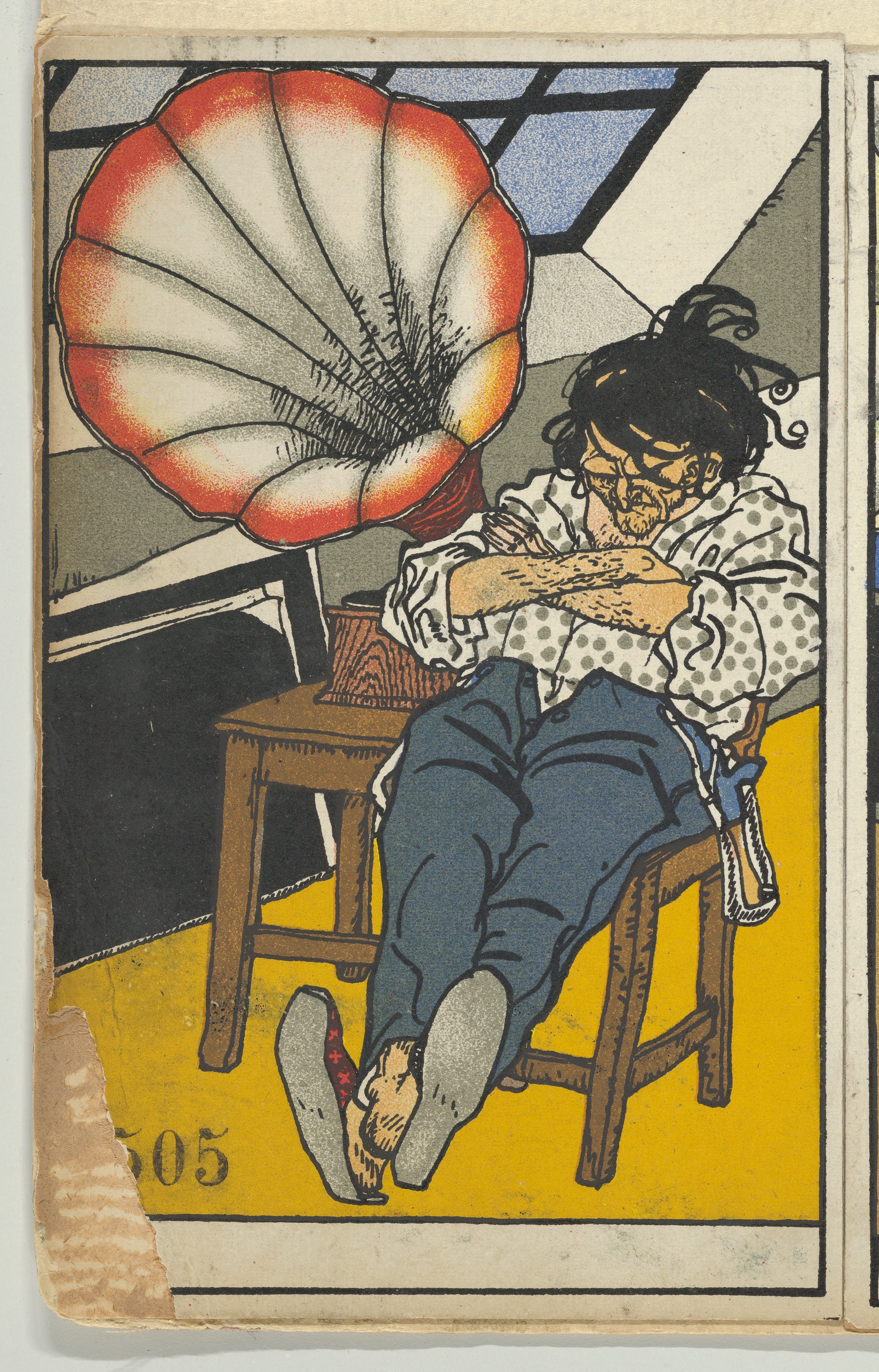
A Beethoven Enthusiast (Ein Beethovenschwärmer)
Moriz Jung|Wiener Werkstätte
More from the Industrial Revolution


Explore what happened on the days that shaped Ludwig van Beethoven's life. Today In History connects historical figures with the events, births, and deaths that defined their era. Browse all historical figures or explore today's events.