

Historical Figure
Galileo Galilei
1564–1642
Italian physicist and astronomer (1564–1642)
Talk to Galileo Galilei
Have a conversation with this historical figure through AI
Biography
Galileo di Vincenzo Bonaiuti de' Galilei, commonly referred to as Galileo Galilei or mononymously as Galileo, was an Italian astronomer, physicist, and engineer, sometimes described as a polymath. He was born in the city of Pisa, then part of the Duchy of Florence. Galileo has been called the father of observational astronomy, modern-era classical physics, the scientific method, and modern science.
In Their Own Words (5)
I am certainly interested in a tribunal in which, for having used my reason, I was deemed little less than a heretic. Who knows but men will reduce me from the profession of a philosopher to that of historian of the Inquisition! But they behave to me in order that I may become the ignoramus and the fool of Italy...
p. 244 , 1633
Names and attributes must be accommodated to the essence of things, and not the essence to the names, since things come first and names afterwards.
As quoted in Discoveries and Opinions of Galileo (1957) by Stillman Drake, p. 92 , 1957
Well, since paradoxes are at hand, let us see how it might be demonstrated that in a finite continuous extension it is not impossible for infinitely many voids to be found.
Salviati, First Day, Stillman Drake translation (1974) , 1638
I have never met a man so ignorant that I could not learn something from him.
As quoted in The Story of Civilization : The Age of Reason Begins, 1558-1648 (1935) by Will Durant, p. 605 , 1935
All truths are easy to understand once they are discovered; the point is to discover them.
As quoted in Angels in the workplace: stories and inspirations for creating a new world of work (1999) by Melissa Giovagnoli , 1999
Timeline
The story of Galileo Galilei, told in moments.
Appointed professor of mathematics at the University of Pisa. He earns 60 florins a year. The philosophy professors earn 2,000. The hierarchy is clear: philosophy sits above mathematics. Galileo spends the next two decades trying to invert it.
Demonstrates his improved telescope to the Venetian Senate. He didn't invent it. A Dutch spectacle maker did. But Galileo grinds his own lenses and achieves 8x magnification, then 20x. The Senate doubles his salary on the spot.
Points his telescope at Jupiter and sees three small stars near it. A few nights later, a fourth appears. They're moving. He realizes they're moons orbiting Jupiter. Not everything revolves around the Earth.
Writes a letter to the Grand Duchess Christina arguing that Scripture and science address different truths. The letter circulates widely. It makes his position clear to Rome. It also makes him a target.
The Roman Catholic Church formally bans him from teaching or defending the idea that the Earth orbits the Sun. Cardinal Bellarmine delivers the warning personally. Galileo agrees to comply. For now.
Publishes Dialogue Concerning the Two Chief World Systems. The book presents heliocentrism through a character debate. The character defending the Earth-centered view is named Simplicio. The Pope, who had approved the project, suspects Simplicio is a caricature of himself.
The Inquisition finds him "vehemently suspect of heresy." He kneels in a Dominican convent in Rome and reads aloud a prepared recantation. He is 69 years old, ill, and nearly blind. Legend says he muttered "And yet it moves" as he rose. He almost certainly did not.
Publishes Two New Sciences from house arrest. The book, smuggled to a Dutch publisher, lays the groundwork for modern physics and engineering. He is completely blind by now. He dictates to his student Vincenzo Viviani.
Dies at his villa in Arcetri, outside Florence, still under house arrest. He is 77. The Pope refuses to allow a monument or funeral oration. His body is placed in a small room next to the chapel. It will take 95 years for it to be moved to a proper tomb.
Pope John Paul II formally acknowledges the Church's error in condemning Galileo. It has taken 359 years.
Artifacts (8)
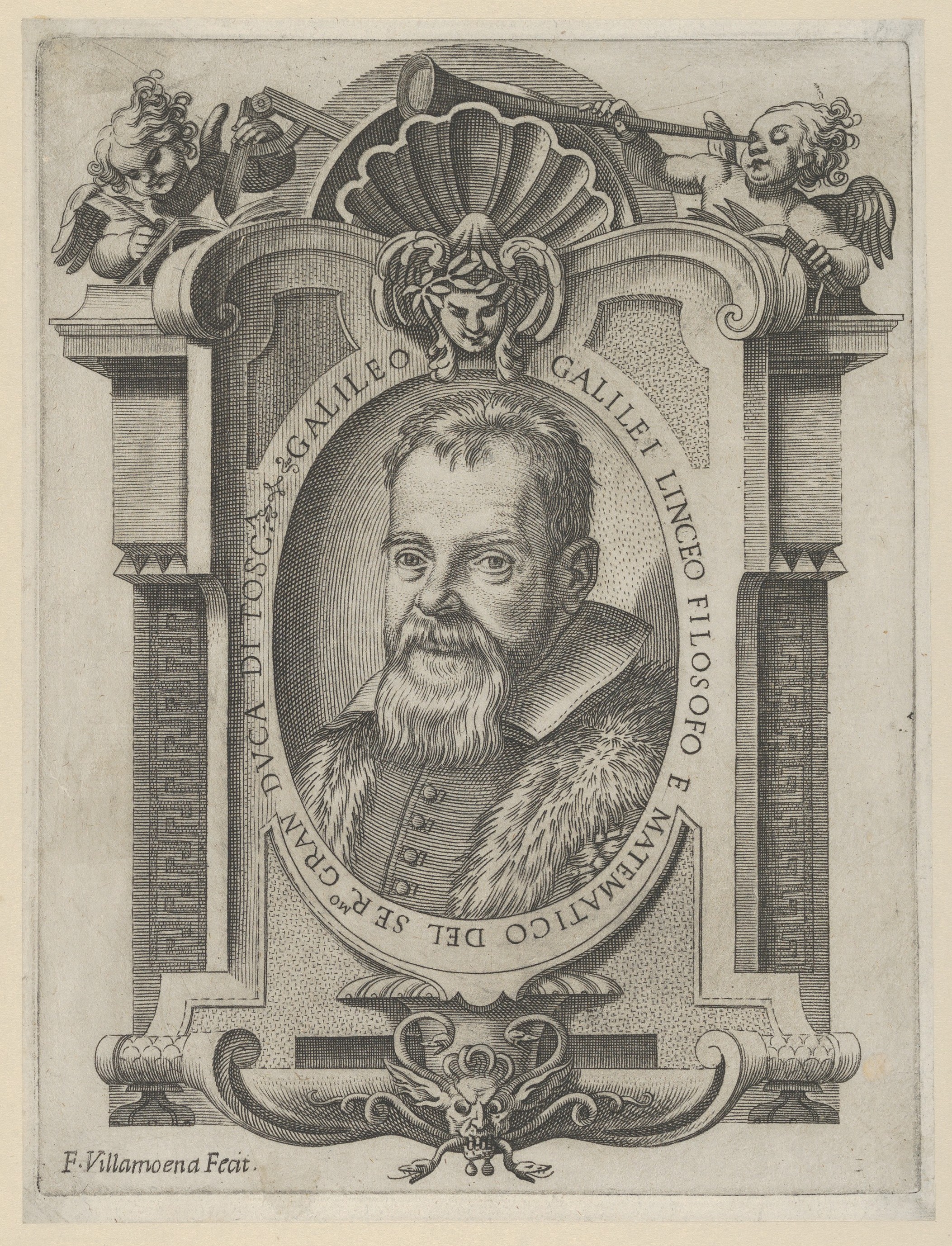
Portrait of Galileo Galilei set within an elaborate cartouche
Francesco Villamena|Galileo Galilei
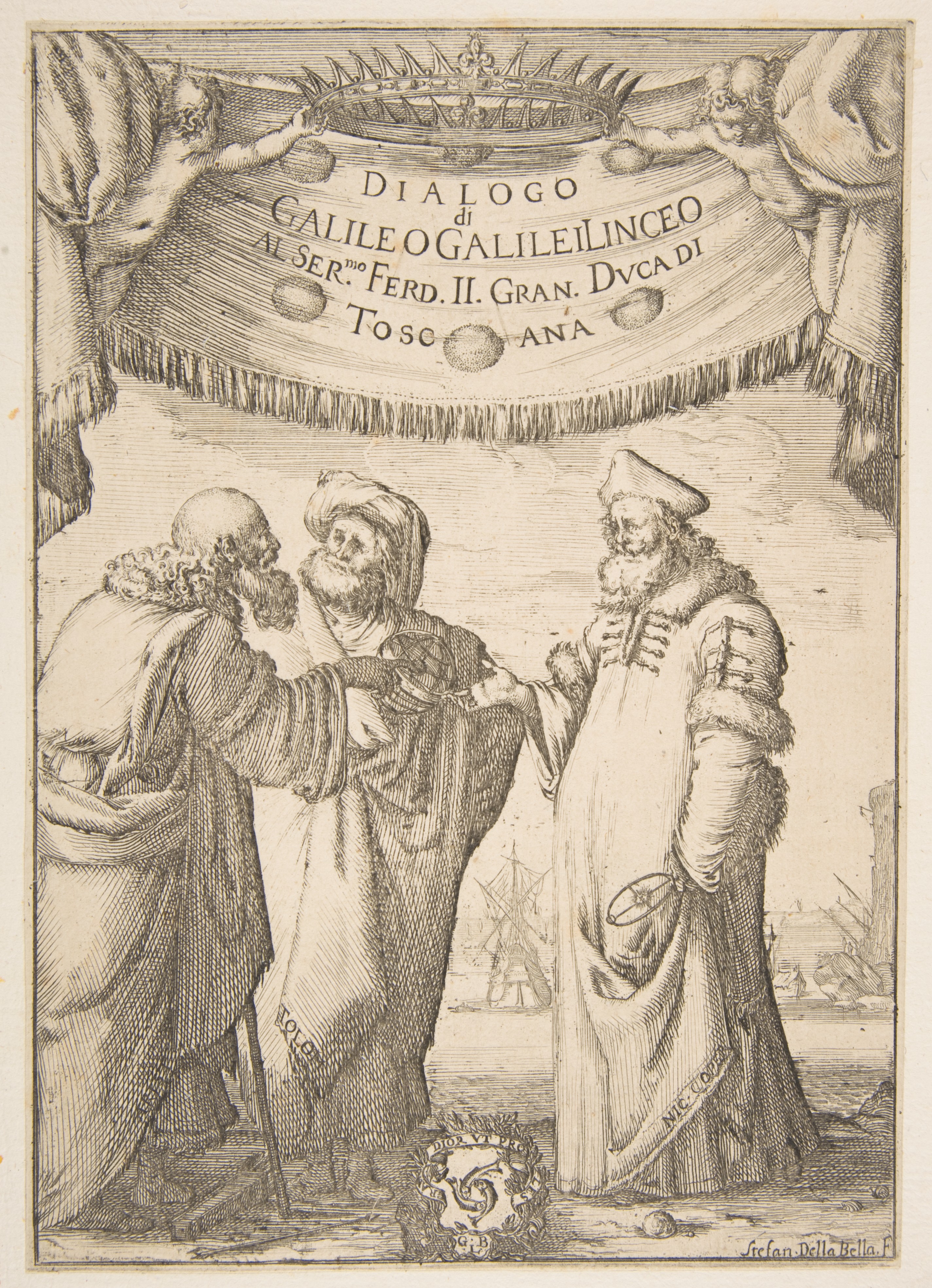
Frontispiece for Dialogo di Galileo Galilei
Stefano della Bella|Giovanni Battista Landini|Ferdinando II de' Medici, Grand Duke of Tuscany
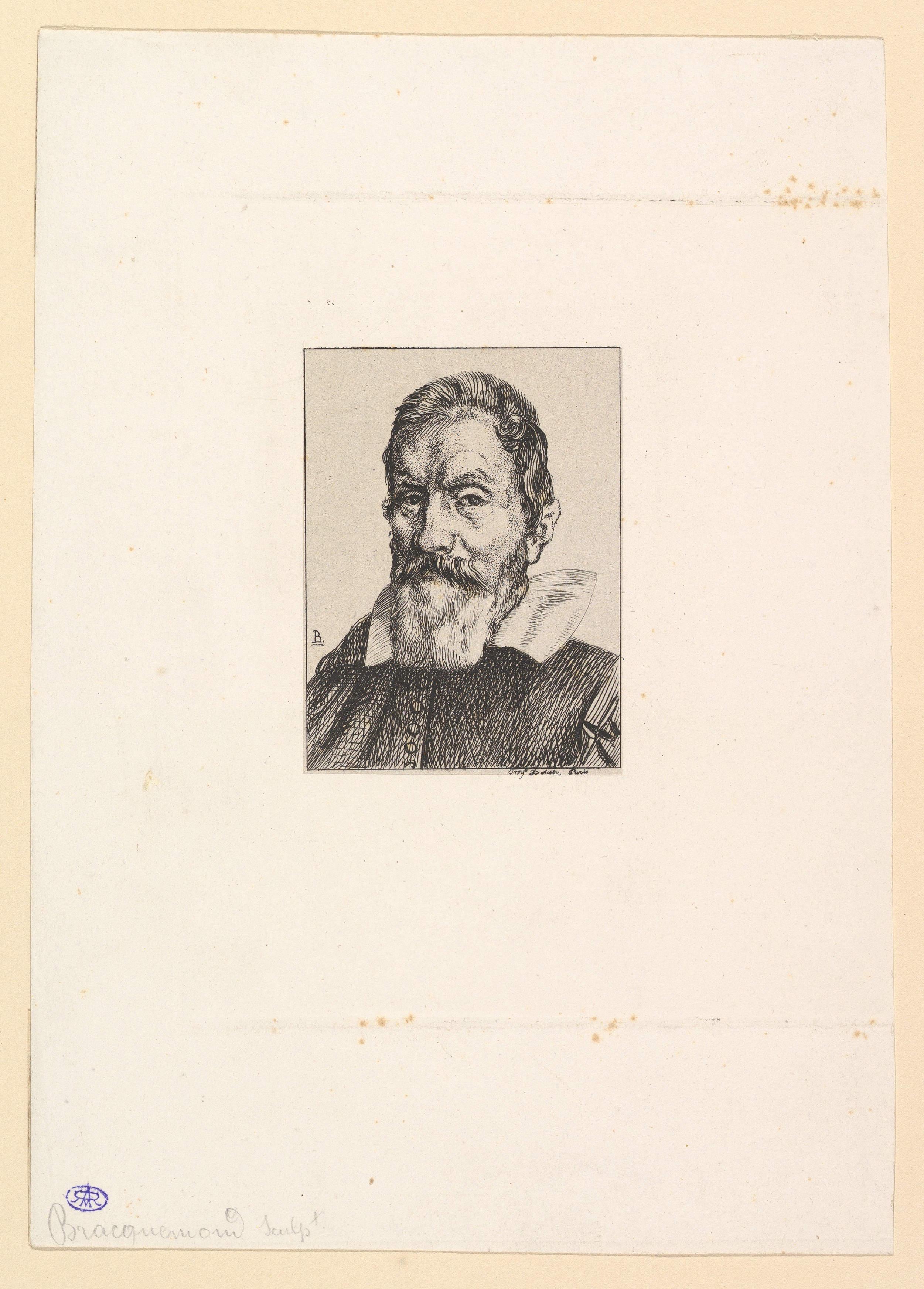
Galilée
Félix Bracquemond|Auguste Delâtre|Galileo Galilei|Auguste Poulet-Malassis|Ottavio Leoni (Il Padovano)
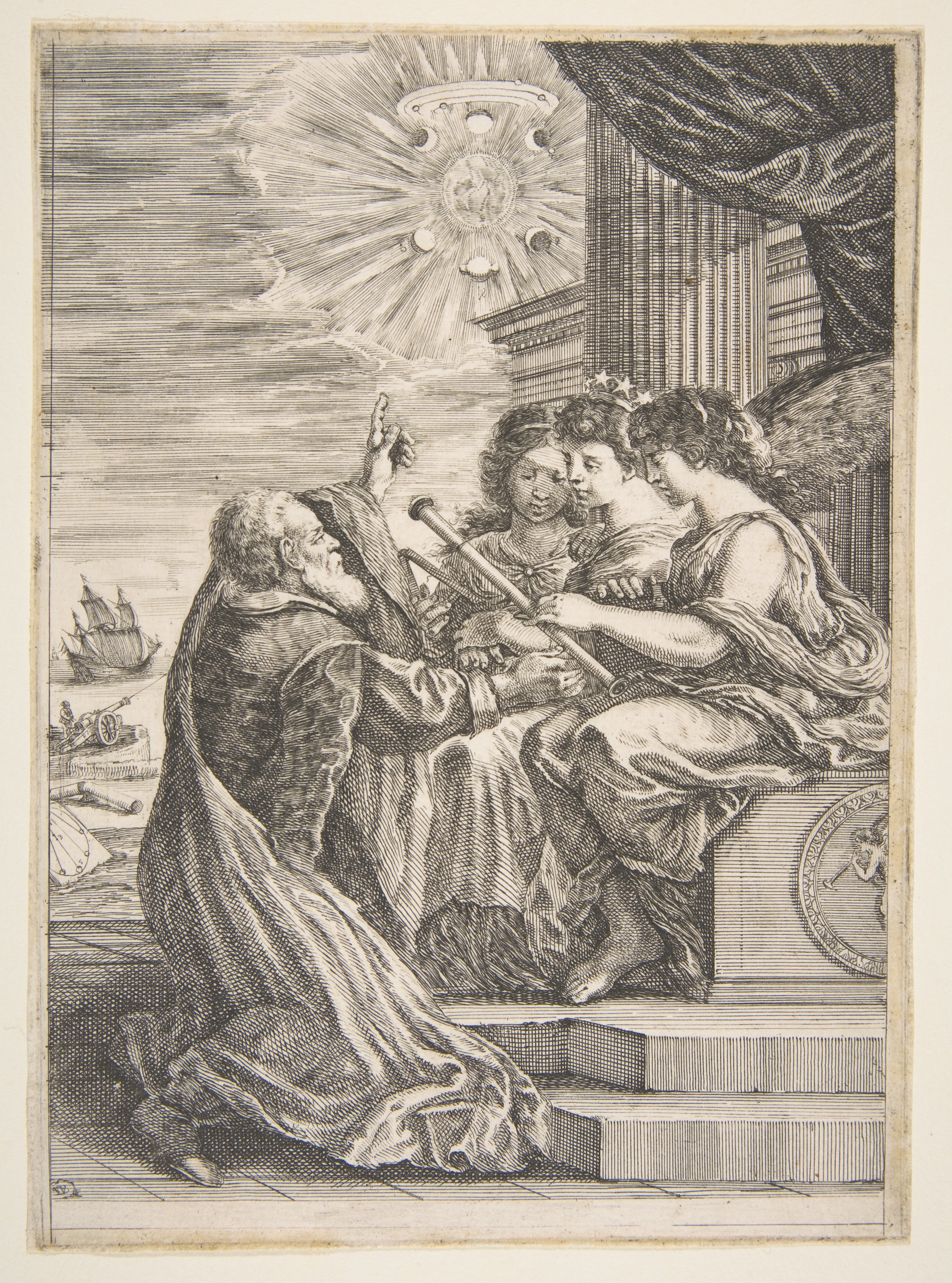
Galileo and personifications of Astronomy, Perspective and Mathematics, frontispiece for 'Opere di Galileo Galilei'
Stefano della Bella|Galileo Galilei
Mathematical discourses concerning two new sciences relating to mechaniks and local motion
I. Of the Refiftance of Solids||II. Of Local Motion, viz. Equa- againft Fraction. ble, and naturally Accelerate. I II. Of the Caufe of their Cohe-||IV. Of Violent Motion, or of rence. PROJECTS By...
More from the Renaissance


Explore what happened on the days that shaped Galileo Galilei's life. Today In History connects historical figures with the events, births, and deaths that defined their era. Browse all historical figures or explore today's events.